
Since the Middle Ages, a woman sentenced to death could delay her execution if she was found to be pregnant. Called “pleading the belly,” the practice was used often until it slowly died out in the 19th century.
“Pleading the Belly” Meaning
“Pleading the belly” was an English common law practice attested to as early as the 14th century.
A woman convicted of a crime and sentenced to death could claim pregnancy in order to delay her execution. If she was found to be pregnant, her sentence would be delayed.
In practice, women who successfully pleaded the belly often had their sentences eventually commuted and were set free. It was popularly thought that many female criminals would attempt to conceive a child by their jailers in order to avoid their fate.
Quickening
In the early 19th century, the common law was amended to narrow the loophole. A Baron Pennefather in Limerick, Ireland declared that an early pregnancy was not enough to stay execution, but that the convicted woman would have to be “quick with child.”
The word “quick,” which originally meant “alive,” meant that the movements of the fetus could be felt and observed.
This milestone was sometimes used to determine when the fetus was considered alive, and whether its death would be considered homicide.
The Jury of Matrons
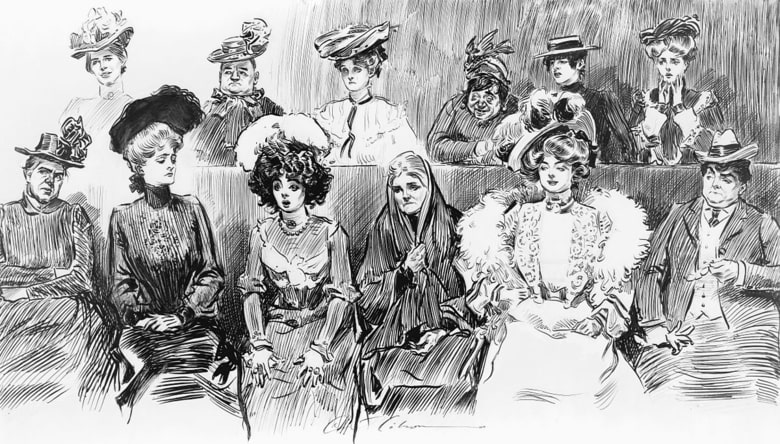
When a woman pleaded the belly, her claim would have to be confirmed by a jury of matrons.
This informal jury of 12 women would inspect the convicted woman to determine whether or not she was quick with child. If she was, her sentence would be delayed until her child was born.
A jury of matrons was also used in the past to determine whether a recently-widowed woman was pregnant. If she was not, and her husband had left no heirs, all his wealth and belongings would be left to his father or brothers, leaving his widow destitute.
This was common practice until the Married Women’s Property Act of 1888 allowed married women to retain ownership of their own property, instead of forfeiting it to their husbands upon marriage.
The use of a jury of matrons became very rare in the 19th century, and was even ridiculed in the press as archaic when it was used.
Famous Women Who Pleaded the Belly
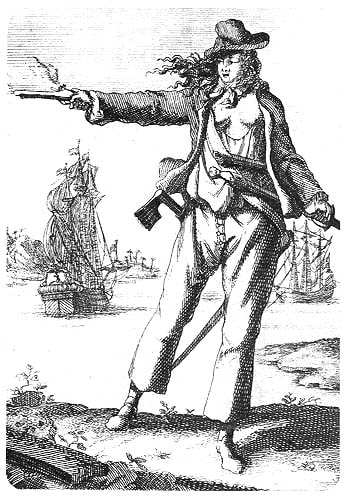
The infamous pirates Anne Bonny and Mary Read both pleaded the belly to delay their executions for piracy. They were both successful in their claims, though Mary Read still died in prison from a fever.
No official record of Anne Bonny’s release or execution survives, but evidence suggests she was either released or escaped and lived until about 1782 at the age of 80.
Kate Webster was an infamous Victorian woman convicted of killing her employer. After being sentenced to death, she tried to avoid her sentence by pleading the belly.
However, a jury of matrons, after an examination lasting just a few minutes, declared that she was not quick with child.
The Obstetrical Society of London protested at the time that not being “quick” didn’t mean she wasn’t pregnant. Still, she was executed by hanging in 1879.

In 1913, Ada Annie Williams confessed to murdering her 4-year-old son so that her estranged husband (not the boy’s father) would return to her. After her confession, she claimed to be pregnant, and a jury of matrons found her claim to be true.
Her execution was postponed until she gave birth, but her sentence was commuted by the time she did. After being released and declared temporarily insane, she went on to became a nurse. This was one of the last known uses of a jury of matrons.
Today we may consider the execution of a pregnant woman to be barbaric, but in the past it was a morally gray area, in part because it was not so easy to detect pregnancy.
The practice of pleading the belly became obsolete not too long ago with the passing of the 1931 Sentence of Death (Expectant Mothers) Act, which made it illegal to sentence a pregnant woman to death.
Next, read about The Law Of Coverture: Why Call A Woman By Her Husbands Name? Or read the story of Sayyida al Hurra, Islamic pirate queen.

Keri is a blogger and digital marketing professional who founded Amazing Women In History in 2011.


Leave a Reply