

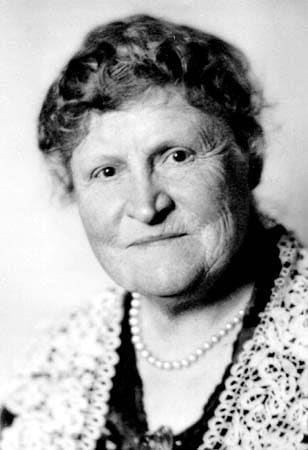
Dixy Lee Ray was not an obvious candidate for governor. In an era when Washington politics still rewarded the practiced politician, she arrived from another world. She was a marine biologist, university professor, museum director, and federal science administrator who had spent most of her adult life studying the natural world rather than cultivating political constituencies. Yet in 1976, after a campaign that surprised much of the state’s political establishment, Ray was elected governor of Washington, becoming the first woman to hold the office.

Born in Tacoma on September 3, 1914, Ray was the second of five daughters. The family spent summers on Fox Island, in Puget Sound, and the natural world became an important influence on her early life. She attended Tacoma public schools and graduated from Stadium High School in 1932. At Mills College in California, she earned bachelor’s and master’s degrees in zoology before receiving her doctorate in biological science from Stanford University in 1945.
That same year Ray joined the faculty of the University of Washington. She became an associate professor of zoology and remained at the university for nearly three decades. Her specialty was marine biology, and she developed a reputation as an energetic teacher with an extraordinary memory for names, faces, and details. Her scientific interests carried her into biological oceanography and international research. In 1963 she became director of Seattle’s Pacific Science Center, where she worked to make science more accessible to the general public.
Her reputation eventually carried her to Washington, D.C. In 1972 President Richard Nixon appointed Ray to the Atomic Energy Commission, and in 1973 she became its chairman, the first woman to hold that position. Ray was an enthusiastic advocate of nuclear energy. She regarded technological development not as an enemy of environmental protection but as one of the principal means by which environmental problems could be addressed. In 1975 President Gerald Ford appointed her Assistant Secretary of State for Oceans, International Environmental, and Scientific Affairs, but she resigned after roughly six months following disagreements with Secretary of State Henry Kissinger.
Ray returned to Washington State with a national reputation but little conventional political experience. On March 15, 1976, she announced her candidacy for governor. She was a political novice, but her campaign was not without powerful supporters. Senators Warren G. Magnuson and Henry M. Jackson served as honorary chairmen. Ray defeated Seattle Mayor Wes Uhlman in the Democratic primary and then faced King County Executive John Spellman in the general election. On November 2, she defeated Spellman by 54 percent to 46 percent and became Washington’s first woman governor. She took office on January 12, 1977.
Olympia proved to be a less forgiving environment than a university laboratory. Ray brought to the governor’s office a scientist’s confidence in her own judgment. She was inclined to regard problems as things to be examined, understood, and solved. Government, however, required compromise, coalition-building, and patience with opponents. Ray was not naturally suited to those disciplines, and her personality quickly became part of the political story.
She was blunt and often unwilling to disguise her opinions for political convenience. Her relationship with the Capitol press corps became notoriously difficult, while her disagreements with influential Democrats, particularly Senator Magnuson, weakened her position within her own party. Supporters regarded her independence as courage; opponents saw arrogance and political recklessness.
The controversy over energy revealed the deeper divide between Ray and the political culture developing around her. Washington was changing rapidly during the 1970s, and environmentalism was becoming one of the defining movements of the Pacific Northwest. Ray belonged to a different intellectual tradition. She believed that science and engineering could solve problems that environmentalists increasingly believed required limits on development. She strongly supported nuclear power and argued for completion of the Washington Public Power Supply System’s nuclear projects. She also supported the use of Puget Sound by large oil tankers, positions that placed her increasingly at odds with environmental activists and many Democrats who had helped elect her.
To Ray, there was no necessary contradiction between technological development and environmental responsibility. She believed modern society could manage the risks created by technology and that environmental problems were, in substantial part, problems that science and engineering could address. Her outlook belonged to an older tradition of scientific conservation, one more comfortable with managing nature than with placing strict limits on industrial development.
Her administration nevertheless had important accomplishments. During her term Washington dealt with a severe drought, and her administration established an Emergency Water Advisory Committee and urged conservation of water and electricity. Education remained an important concern, and Washington moved toward full state funding of basic education during her tenure.
Ray also became an unusual figure in the politics of women’s rights. Her own career had broken through barriers that had excluded women from many scientific and political institutions, yet she did not identify herself with the emerging women’s movement. She refused to campaign for the Equal Rights Amendment and signed legislation abolishing the Washington State Women’s Council. Ray wanted to be judged as a scientist, a governor, and an individual rather than as a representative of a political category.
Then, in 1980, Mount St. Helens erupted. The volcano had been showing signs of increasing activity for weeks, and Ray’s administration established danger zones around the mountain before the catastrophic May 18 eruption. The restrictions were controversial, but they probably helped save many lives. The disaster became the defining natural event of Ray’s governorship and placed her administration at the center of a crisis that had little to do with the political controversies that had previously dominated her term.
By then, however, Ray’s political position had deteriorated badly. Her feud with Magnuson had damaged her standing among influential Democrats, while her positions on nuclear power, development, environmental regulation, and women’s issues had alienated much of the party’s changing constituency. Her relations with the press remained poor, and even her distinctive personal manner had become part of the opposition to her. At her Fox Island home, she once named a litter of piglets after members of the Capitol press corps, an episode that became part of the folklore surrounding her administration.
In 1980 she sought renomination for a second term but lost the Democratic primary to State Senator Jim McDermott. John Spellman, the Republican she had defeated four years earlier, went on to win the governorship. Ray left office on January 14, 1981, after a single term. She returned to Fox Island and largely withdrew from public life, living among animals and pursuing the private interests that had remained important to her long before she entered politics. She died at her Fox Island home on January 2, 1994, at the age of seventy-nine.
It is tempting to remember Dixy Lee Ray as Washington’s first woman governor, but that distinction does not adequately describe her. Her importance lies in the contradictions. She was a Democrat who often stood outside the emerging Democratic consensus, a scientist who became an opponent of many environmentalists, and a pioneering woman who did not identify herself with the political movement transforming women’s public role. She believed deeply in science but had little patience for authority based solely on expertise, and she believed in environmental responsibility while placing extraordinary faith in technological development.
Ray’s political career unfolded just as the Pacific Northwest was developing a new environmental consciousness. The state was moving toward greater skepticism of large institutions and technological projects, while Ray continued to believe that knowledge, properly applied, could solve many of the problems confronting modern society. Her four years in the governor’s office therefore tell a larger story about Washington in the 1970s: a period when older assumptions about progress were being challenged by new ideas about conservation, politics, and the role of government.
Ray’s career cannot comfortably be placed along the familiar political spectrum. She entered public life as a scientist, became the nation’s first woman to chair the Atomic Energy Commission, and then became the first woman elected governor of Washington. She left office after four turbulent years and spent her final years far from the political world that had both elevated and rejected her.
History has a tendency to smooth complicated lives into symbols. Ray resists that treatment. She was too independent, too contradictory, and too unwilling to behave according to expectation. Her political career ended in defeat, but her historical importance did not. Dixy Lee Ray remains a revealing figure in Washington history because she stood at the intersection of scientific optimism, environmental politics, the changing role of women, and the growing difficulty of governing through conviction alone. She broke a barrier, challenged her own political allies, and ultimately paid a political price for refusing to become a more conventional politician. That combination of achievement and stubborn independence is what makes her story worth remembering.

Eric Schubert is a public historian, genealogist, and forensic genetic genealogist based in Lancaster County, Pennsylvania. A graduate of Elizabethtown College and Millersville University, his research focuses on overlooked histories, local biography, historic preservation, and genealogy. His work has received national attention through coverage by The New York Times, People, Good Morning America, The Washington Post, and other media outlets. Schubert serves on the board of the Historic Preservation Trust of Lancaster County and is a White House Historical Association Next-Gen Leader.

Beyond the article
Join the Conversation
Share your perspective, ask a question, or add something to the story.