
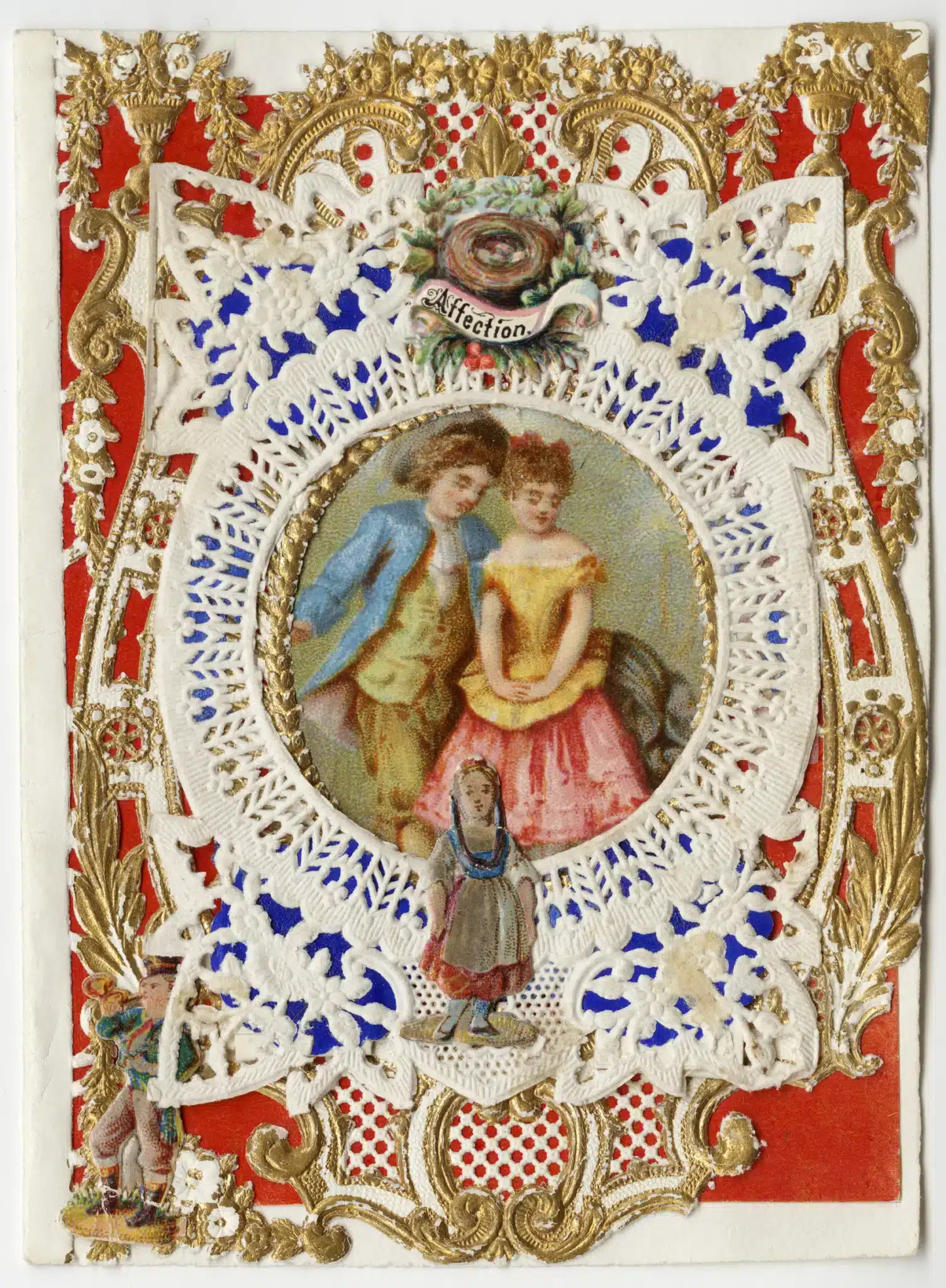
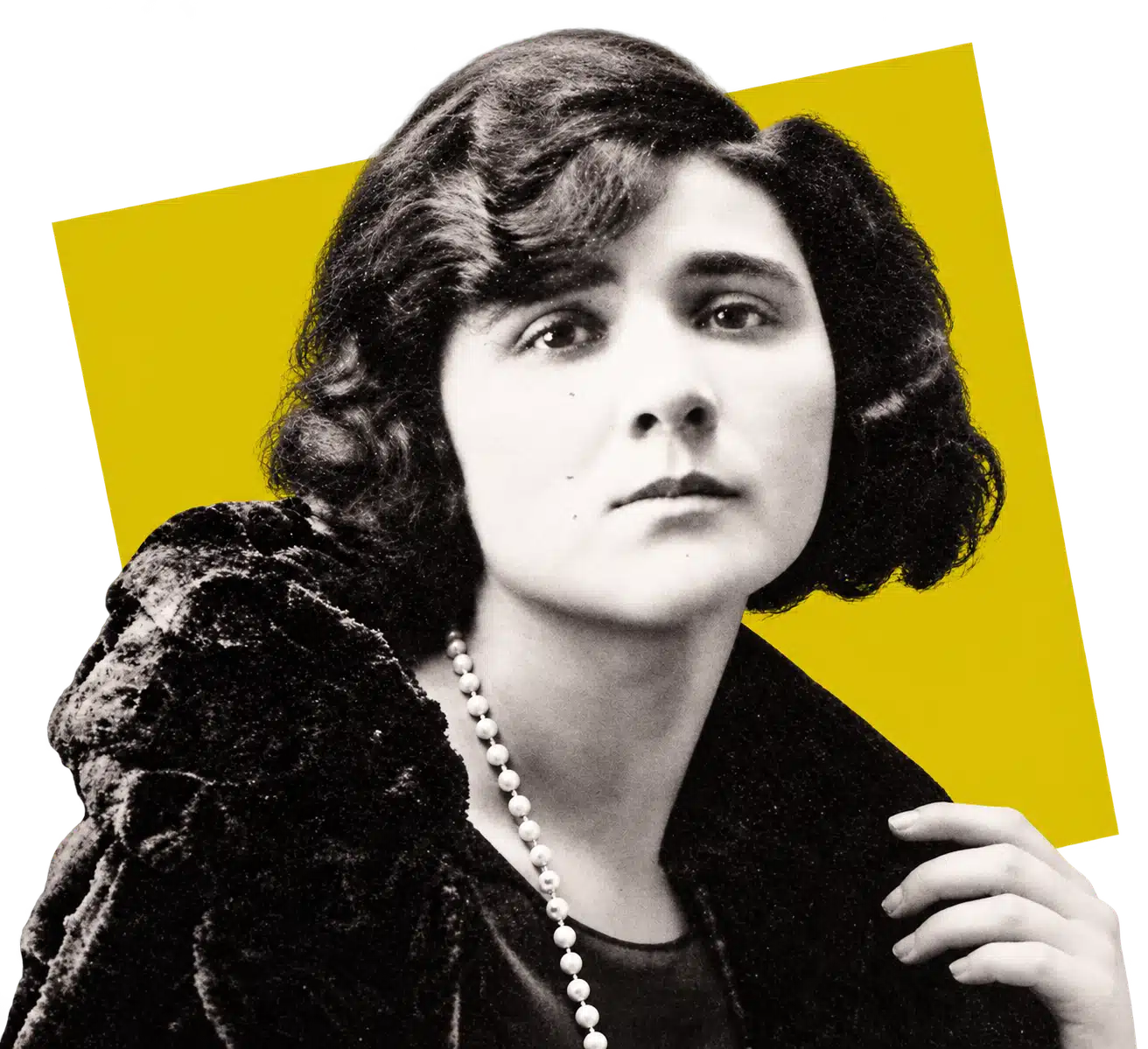
Esther Howland (1828–1904) helped popularize elaborate Valentine’s Day cards in America by turning her family’s upstairs rooms into a busy workshop. She designed the cards, recruited women to assemble them, and sold them across the country. The woman remembered as the “Mother of the American Valentine” made a successful business out of helping other people send their love.
A few samples, far too many orders
According to local legend, Esther received an elaborate English valentine from one of her father’s business associates in 1847. It gave her an idea: she could make cards of her own.
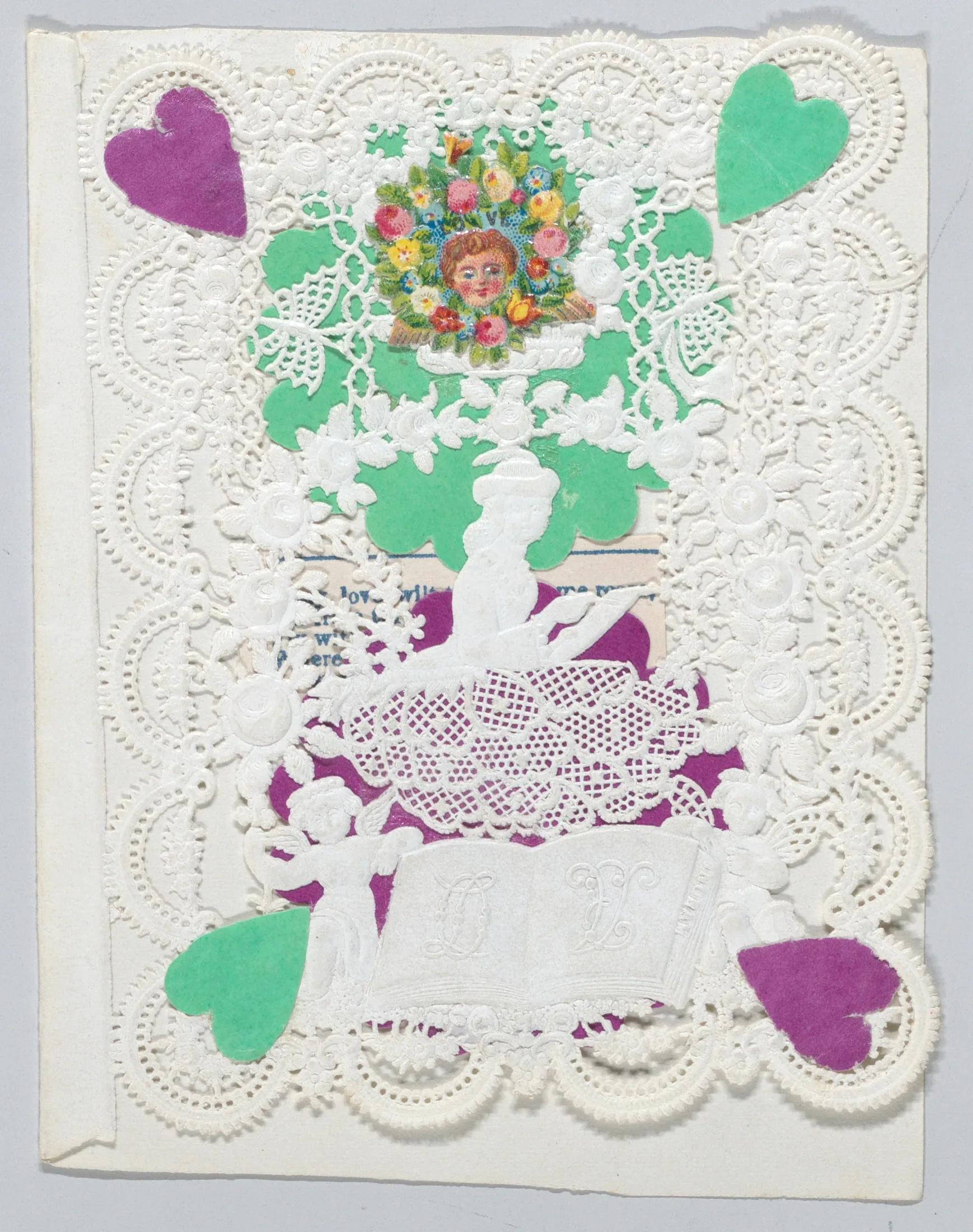
She had a useful advantage. Her father owned a successful stationery and book business in Worcester, Massachusetts, with access to suppliers overseas. She persuaded him to order paper lace, flowers, and other decorations, then made a dozen sample designs. Her brother, a traveling salesman for the family business, took them along on a sales trip to show potential customers.
He came home with more orders than she could possibly fill alone. Later accounts put their value at $5,000. She’d tested whether people wanted her cards. Now she had to work out how to make enough of them.
An upstairs production line
Esther recruited friends to help, and the operation grew into a workroom on the third floor of the family home on Summer Street. She provided the designs, and the women divided up the work needed to reproduce them.
One worker cut out little printed pictures and sorted them into boxes. Another prepared backgrounds. Others added the decorations, passing the cards along as each task was finished. Henry Ford gets remembered for the assembly line, but Esther and her workers were dividing up production more than sixty years before his Model T line began moving.
Paper lace was embossed and pierced to resemble real lace, with raised patterns and tiny openings. Bright pieces of colored paper placed beneath it made those patterns stand out. Printed flowers, birds, and other pictures could be pasted over the top.
Some designs became little constructions, with layers held apart by folded paper springs. The recipient could lift a flap or look through openings to find another picture underneath. A valentine attributed to Esther’s workshop, now in the Metropolitan Museum of Art, has blue satin, a white ribbon rosette, imitation pearls, and paper doors that open to reveal a couple.
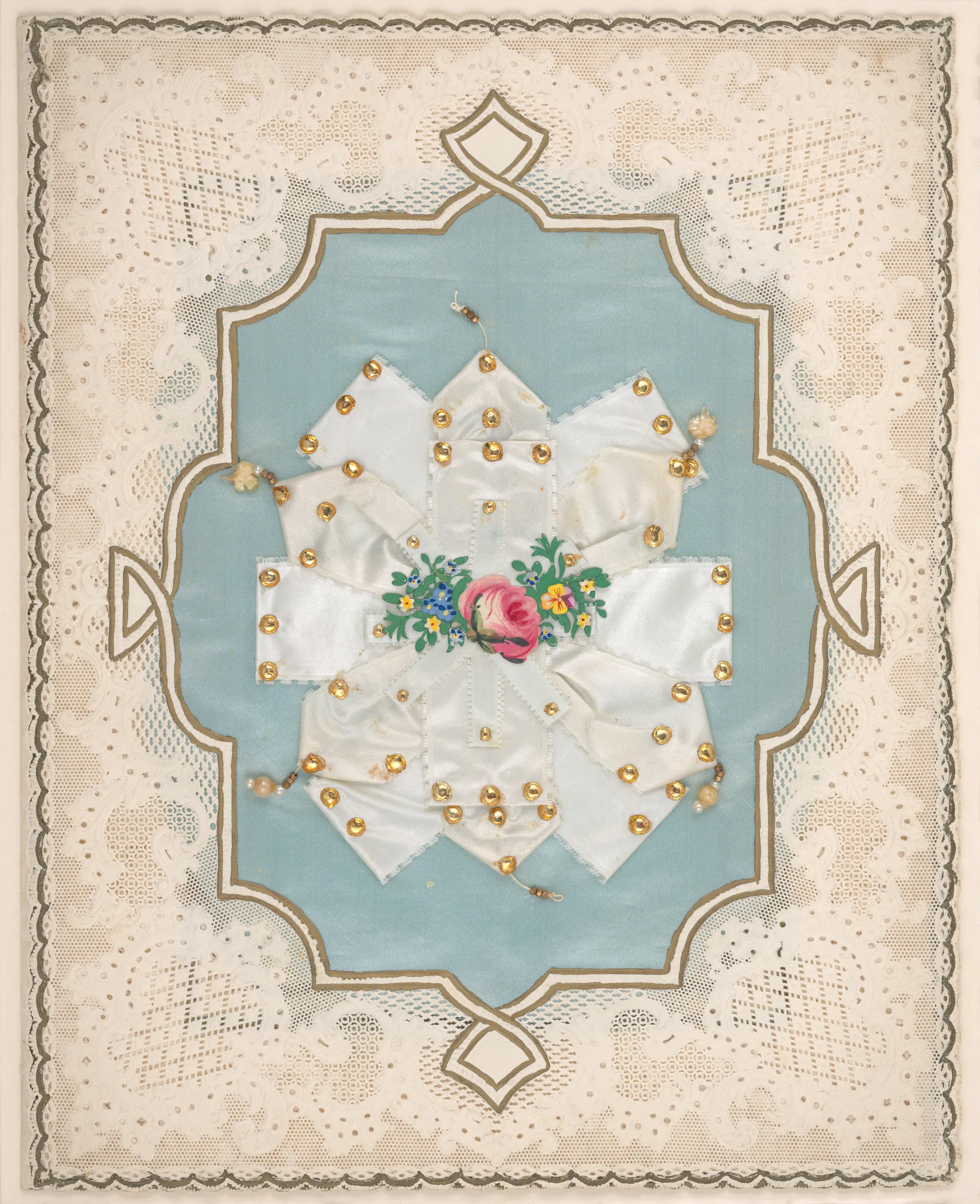
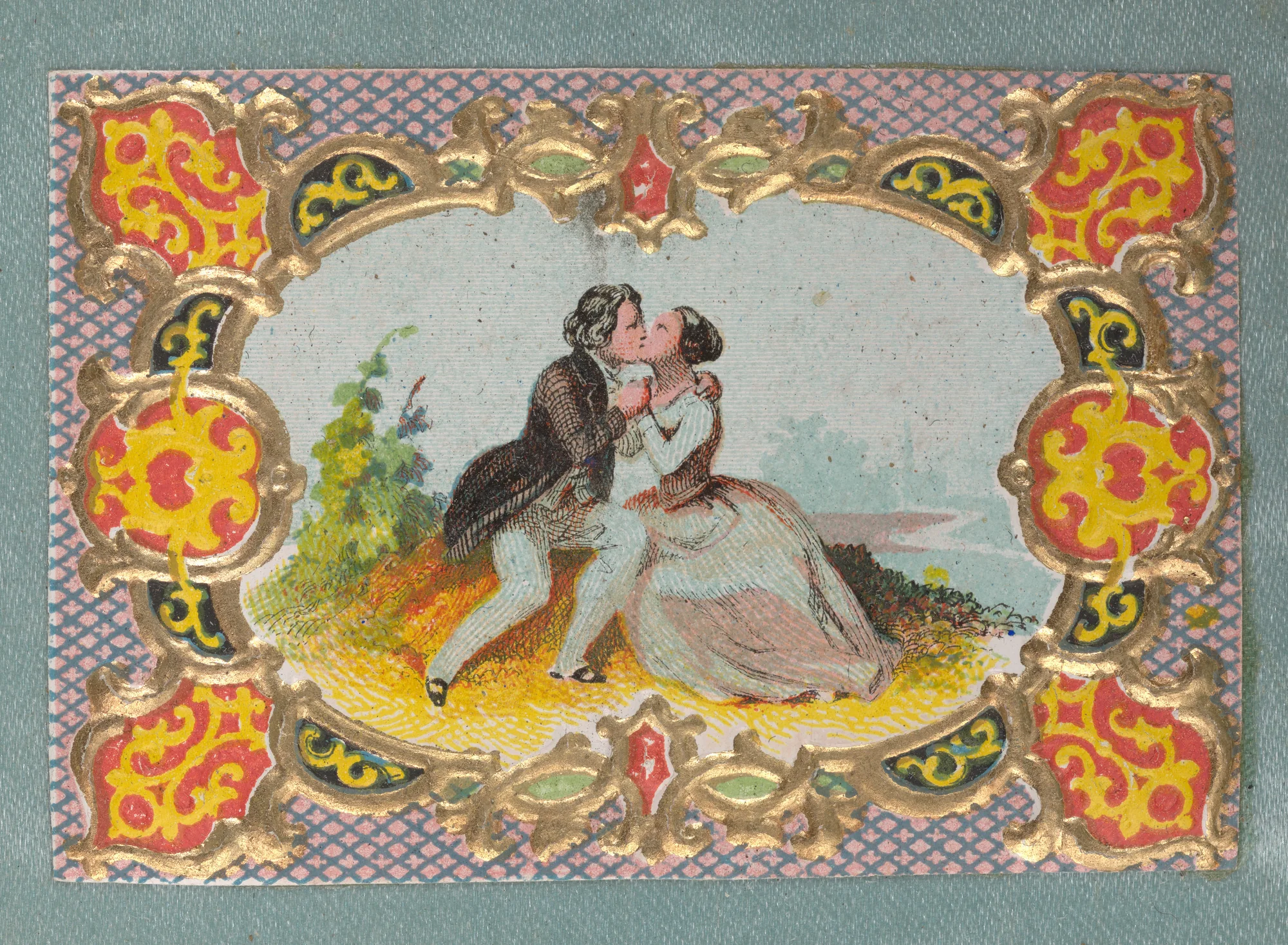
These details gave buyers something more elaborate than a printed message on a flat sheet. Esther’s way of organizing the work let her produce the same intricate design again and again.
Esther never married, and her business gave her a way to support herself without a husband’s income. Under the legal tradition of coverture, marriage had long restricted a woman’s control over her property and earnings. Because she was single, Esther could own property, sign contracts, and keep control of the money she earned.
Esther stayed in the valentine business for about thirty years. Her cards carried messages from one sweetheart to another, but behind their paper lace was the shared work of the women who cut, sorted, and pasted them together. By selling their elaborate creations across the country, Esther helped turn the store-bought valentine into an American holiday tradition.
Sources and Further Reading
- Mary Champagne, “Esther Howland and the Business of Love,” Library of Congress.
- Worcester Historical Museum, “Valentines” and the Howland Valentine Collection guide.
- American Antiquarian Society, “Esther Howland” and “Mother of the Valentine.”
- Christina Michelon, “Touching Sentiment: The Tactility of Nineteenth-Century Valentines,” Commonplace, Winter 2016.
- The Metropolitan Museum of Art, Howland’s Valentine, 1847–70, and Valentine with lace paper and faux pearls, circa 1855, attributed to Howland.
- National Park Service, “Mary Newport Founds a Baking Dynasty,” including an explanation of single women’s property and earnings rights.
- The Henry Ford, “Ford Methods and the Ford Shops.”

Keri is a blogger and digital marketing professional who founded Amazing Women In History in 2011.
A fascinating piece of history. Before Esther produced her cards, would people in America make their own, or had Valentine’s Day yet to take off as a popular event?
Hi Nuala, great question! Valentine’s Day was very popular in America and Europe at the time, and in America wood engraved or lithographic Valentines were available but most were handwritten paper cards. Some Americans imported the elaborate paper lace and ribbon Valentines popular in Europe, but they were incredibly expensive! So by the time Esther started manufacturing her Valentine cards, there was a huge market excited & ready to buy them.