
It might seem like women’s rights and alcohol prohibition would be on opposite sides of the political spectrum. But did you know that throughout the 19th and early 20th centuries, women’s suffrage and the temperance movement were both considered radical causes? Many suffragists, in addition to their work for women’s rights, were also a part of the temperance movement, which advocated for reduced or no alcohol consumption.
Both movements culminated in the same year: 1920, when the 18th Amendment prohibiting alcohol came into effect and the 19th Amendment enfranchising women was ratified.
How was the women’s suffrage movement connected to the temperance movement?
Let’s take a look at how it started…
Why Did the Temperance Movement Want Prohibition?
As the United States developed, its people started turning from light alcoholic beverages, such as beer and hard cider, to stronger beverages like rum and whiskey as they became cheaper.
The production of rum especially was part of the whole slave trade. Slaves from Africa were brought to the West Indies to grow sugar, which was used to make rum. That’s why it started to become available so cheaply.
What many citizens saw as an epidemic of alcoholism followed.
Remember that at this time, women had no rights. A woman was legally not a person, and was considered to be the property of her father or husband.
So what happened if a woman got married to a man who turned out to be an alcoholic? If he spent all their money on booze, or even became violent?
Legally, there was no escape.
What could women do?
All they could do was ask men to stop drinking so much.
That’s how the rise of cheap alcohol and growing alcoholism led to the growth of the women’s temperance movement in the early 19th century.

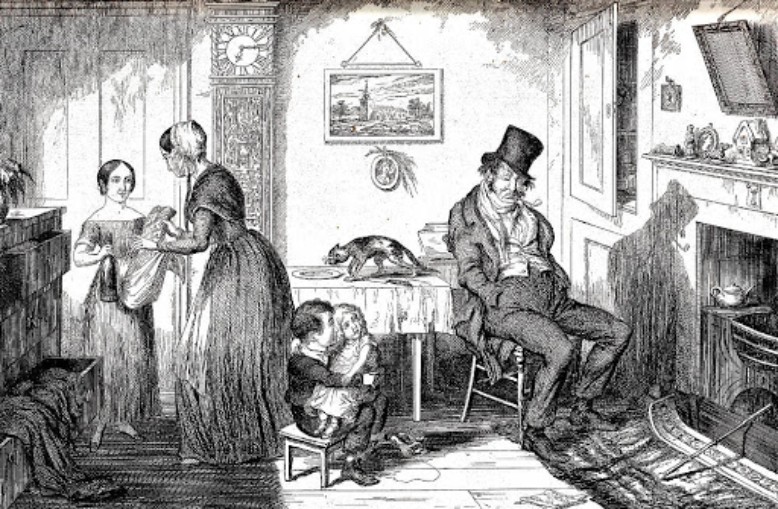
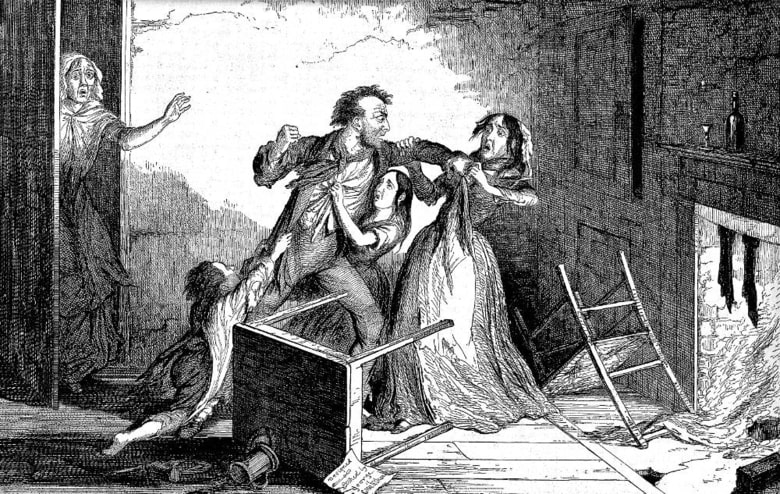
Advocates for temperance linked the consumption of alcohol with greater issues like violent crime, poverty, unemployment, and domestic violence.
Though at first campaigning for moderation, the movement became more radical after the Civil War and began calling for complete prohibition of all alcohol. National organizations such as the Anti-Saloon League and the Woman’s Christian Temperance Union grew quickly, and by the late 19th century became very powerful in lobbying for prohibition legislation.
Women’s Suffrage and Prohibition
Around the turn of the 20th century, Western society still overwhelmingly believed in biological determinism: that men and women had different inherent natures determined by their respective biology.
Women were thought to be morally superior to men by nature, and many advocates for women’s suffrage argued that women should have the vote because of this.
Advocates for temperance wanted women to have the vote because it was believed they would vote for prohibition due to their moral superiority. Many breweries, on the other hand, lobbied against the suffrage movement out of fear of losing their businesses to prohibition.
A Respectable Suffrage Movement
Groups such as the Woman’s Christian Temperance Union (WCTU), founded in 1873, linked together the causes of Christianity, temperance, and social reform.
As a religious organization, the WCTU was seen as a more ladylike and respectable way for women to become involved in the struggle for suffrage. Since each local chapter of the WCTU was autonomous, local leaders had the freedom to act on issues such as women’s suffrage under the banner of a respectable religious organization.
Suffrage and Temperance Movement Leaders
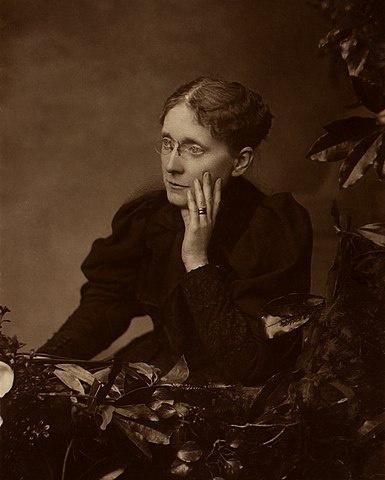
Many of the most famous early feminists and women’s suffrage advocates were also supporters of prohibition. The WCTU’s second president, Francis Willard, broadened the organization’s activism with her slogan “Do everything.” A feminist and suffragist, Francis Willard fought not only for temperance and women’s suffrage, but for other radical causes such as workers’ unions, federal aid for education, and an eight-hour workday.
Perhaps the most famous pair of United States suffragists, Susan B. Anthony and Elizabeth Cady Stanton, were temperance activists before they became involved in the women’s suffrage movement. Susan B. Anthony, before becoming a famous speaker on women’s rights, gave her first speech at a Daughters of Temperance dinner. Together Susan B. Anthony and Elizabeth Cady Stanton co-founded the Woman’s State Temperance Society in 1852, the first women’s state temperance society in America.
Though the temperance movement mostly died out after the repeal of the 18th Amendment in 1933, adherents to the movement continue to exist to this day.
The Woman’s Christian Temperance Union still fights for social reform, though they are now considered extremely conservative in their current stance against abortion rights and same-sex marriage. The feminist movement, on the other hand, is now mainly considered a liberal cause. This strange alliance, though it lasted almost a century, died out soon after the death of prohibition as each movement went its separate way.
Next, read about Suffragist vs Suffragette: What’s the Difference? or Henrietta Dugdale, Australian women’s rights and suffrage pioneer.

Keri is a blogger and digital marketing professional who founded Amazing Women In History in 2011.
Very informative! Thank you Keri!
Thanks for stopping by, Steven!
Hey! Are you still open for questions?
If so, what do you mean by women were thought to have generally a moral superiority:
“Women were thought to be morally superior to men by nature, and many advocates for women’s suffrage argued that women should have the vote because of this.
Advocates for temperance wanted women to have the vote because it was believed they would vote for prohibition due to their moral superiority. Many breweries, on the other hand, lobbied against the suffrage movement out of fear of losing their businesses to prohibition.”
Thanks, Ashley.
Hey Ashley, great question. In that era, women were often thought to be more virtuous – you can check out this paper for more details (PDF) – https://core.ac.uk/download/pdf/1536294.pdf
Heya, I am putting together an explination of why the 18/19th amendments are more closely linked than we all might have first thought for my AP Gov. Students and Your information here made that much easier! Thank you 🙂
Awesome! It’s a super interesting topic 🙂
Hi,
A really interesting read! Just wondering what the publish date was so I can cite it in my reference list
Thanks so much
had to read this for school. very good.