
Ancient Egyptian women had many legal rights compared to women of other ancient societies. In the city-states of Ancient Greece, for example, a woman had to be represented by her father, brother, or husband in court, and couldn’t legally speak for herself. In the Roman Republic, a woman was legally subject to her husband’s power as head of household, with her rights subsumed by his. Ancient Egyptian women, however, had a legal status almost equal to men.
Ancient Egyptian Women’s Legal Rights
Ancient Egyptian women were legally able to sit on juries and testify in trials. Surviving documents record women speaking in court and show that their testimony is held as equally reliable to men’s testimony.
Women could also enter into contracts in their own name, sue others, and be sued. Female criminals were also subject to the same penalties as a man.
Women’s Property Rights in Ancient Egypt
Unlike Ancient Greek or Roman women, Ancient Egyptian women could legally own and manage their own property. Surviving documents show that women owned and were responsible for taxes on about 10% of recorded property.
Ancient Egyptian women even retained their property rights when they got married, which wasn’t even the case in the United States until laws started to change in the 19th century. In Ancient Egypt, prenuptial contracts were usually used to protect a woman’s property in case of divorce.
Joint property was property obtained during a marriage, which was owned jointly by both the husband and wife. While a husband could sell joint property without his wife’s permission, he was legally obligated to compensate his wife with something of equal value.
Was Divorce a Thing in Ancient Egypt?
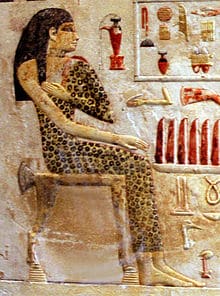
Although many upper-class marriages were arranged by the wife-to-be’s family and her future husband, women did have a say in the matter. A standard literary theme in Ancient Egyptian writings showed women persuading their fathers to let them marry the man they loved, so this was probably not uncommon in practice.
Divorce in Ancient Egypt was easy and routine. Either the husband or the wife could initiate a divorce for any reason. A man who initiated a divorce had to return his wife’s dowry and pay a fine. A woman who initiated divorce did not have to pay a fine. This practice was in place to protect women, who were usually financially dependent on their husbands.
Remarriage after divorce was also commonplace. It wasn’t considered unusual for men or women to marry three or four times in their lives.
In contrast to many other ancient societies, adultery was considered wrong not just for women but also for men. The guilty party, whether it was the husband or wife, automatically forfeited their rights to any joint property.
Women’s Work and Daily Life in Ancient Egypt
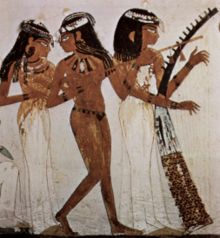
Upper-class women in Ancient Egypt could make and sell perfume and retain the profit they made. They could also respectably work in courts or temples, or perform as acrobats, dancers, singers, or musicians.
Some women worked as priestesses, practicing doctors, or even independent business owners. It was also common for women of any class to work as professional mourners or musicians.
In government, women could be employed as high officials or scribes. There were even several female pharaohs, though they took on all the masculine trappings of the role. Because of this practice, historians have doubts about whether some pharaohs in history are male or female.
Though Ancient Egyptian women were equal to men in many legal respects, they weren’t socially equal. Many of their legal rights weren’t often put into practice.
For example, while women could legally serve on juries, surviving records show that they rarely did in reality. Though wives were able to own their own property and run their own businesses, they were still considered dependent on their husbands and identified by his name and title.
Still, Ancient Egypt is remarkable among other ancient societies for all the legal rights women had that were unheard of in other cultures until the modern era.

Keri is a blogger and digital marketing professional who founded Amazing Women In History in 2011.

Leave a Reply