
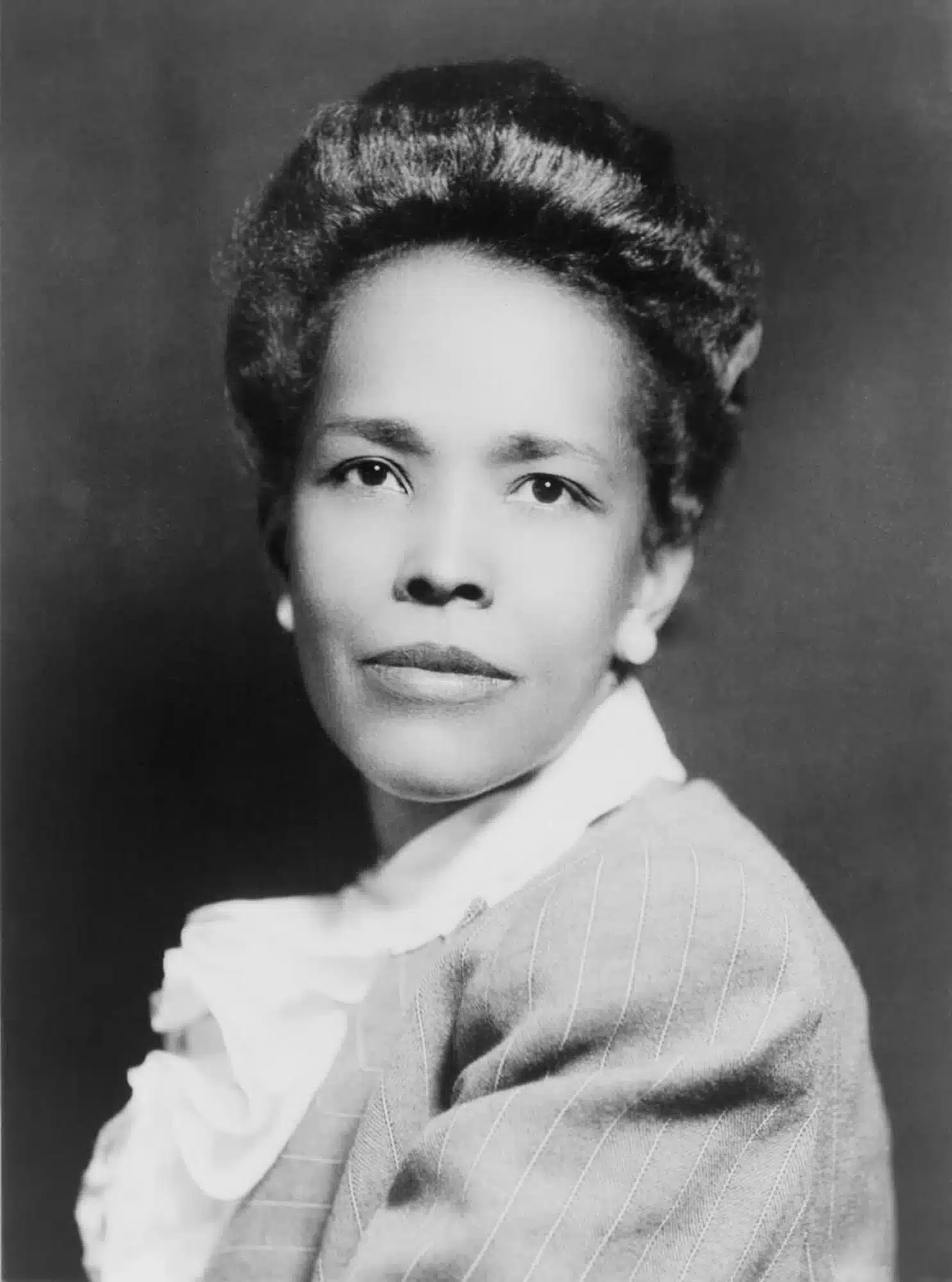
Ella Baker (1903–1986) had a huge impact on the American civil rights movement, yet rarely received the attention given to its famous male leaders. She believed in empowering people to fight for themselves and become leaders in their own communities. In 1960, she helped student protesters build an organization that became a major force in the struggle for Black voting rights. She wasn’t interested in making people dependent on her. She wanted them to discover how much power they could wield together.
Bringing Students Together
On February 1, 1960, a Woolworth’s store in Greensboro, North Carolina, refused to serve four Black college students at its lunch counter. That act of discrimination helped spark a wave of protest that reached far beyond one prejudiced store. The students, from North Carolina A&T College, stayed in their seats until closing. More joined them the next day, and soon young people across the South were staging sit-ins of their own.

At the time, Ella Baker was running the Atlanta office of the Southern Christian Leadership Conference (SCLC), the civil rights organization led by Martin Luther King Jr. King was its president and famous spokesman. Baker handled the work of keeping the organization going: correspondence, contact with local organizers, and the voter-registration campaign she’d come to Atlanta to organize in 1958.
When executive director John Tilley resigned in April 1959, Baker took over his responsibilities as acting executive director. But SCLC’s male ministers wouldn’t appoint her permanently. They relied on her to run the organization while looking for a minister to take the job. Reverend Wyatt Tee Walker, who succeeded her in 1960, later described her position as “just a holding action.”
Baker understood exactly what she was up against. “They couldn’t have tolerated a woman,” she said later.
As the sit-ins spread, Baker followed the student protests with intense interest. She’d spent years organizing communities across the South and knew how important it was for scattered groups to be able to work together. The students were showing extraordinary courage, but many had little contact with protesters outside their own communities. Baker wanted them to share tactics, learn from each other, and help one another keep going.
So she proposed a conference that would bring the student protest leaders together for three days at Shaw University, the historically Black university in Raleigh where she’d studied. She persuaded King to provide $800 from SCLC. With that backing secured, she sent invitations bearing both their names to schools and communities across the South.
One student, Charles McDew, didn’t even know who Baker was when the invitation arrived. But a local minister told him, “if Miss Ella Baker said she wants you to do something, you can put your life in her hands.” Years of work outside the national spotlight had earned her that kind of trust.
Organizing the Student Conference at Shaw
Baker arranged the gathering for Easter weekend, April 15–17, 1960. Bringing students from different states to Raleigh meant finding places for them to sleep and eat, as well as planning their discussions. Shaw could house only about forty students, so she secured cooperation from nearby St. Augustine’s College and the YMCA to accommodate more.

But the most important question was what the students would be allowed to do once they got there. King hoped they would become a student wing of SCLC. Baker wanted them to be free to build an organization they could run themselves.
She made that intention clear before the meeting began. In a March memorandum to King and fellow SCLC leader Ralph Abernathy, Baker reported an agreement with other organizers that the adults would serve as advisers. They should agree to “speak only when asked to do so.”
Baker later recalled a meeting at Raleigh where adult leaders discussed how to control the students’ votes. No students were present. She refused to go along with the manipulation and walked out.
The students established a temporary Student Nonviolent Coordinating Committee (SNCC, pronounced snick) to keep their campaigns connected and coordinate their work. They accepted help from SCLC while keeping control of their own organization. Baker had helped them gain resources and support without surrendering their independence.
You didn’t see me on television, you didn’t see news stories about me. The kind of role that I tried to play was to pick up pieces or put together pieces out of which I hoped organization might come. My theory is, strong people don’t need strong leaders.
Ella Baker
Helping Students Build an Independent Organization
After Shaw, Baker continued working alongside the young organizers. She provided space for SNCC in SCLC’s Atlanta office and helped prepare reports and statements. Working with Jane Stembridge, SNCC’s first staff member, she put her experience at the disposal of students who were learning how to run a new organization while fighting segregation.
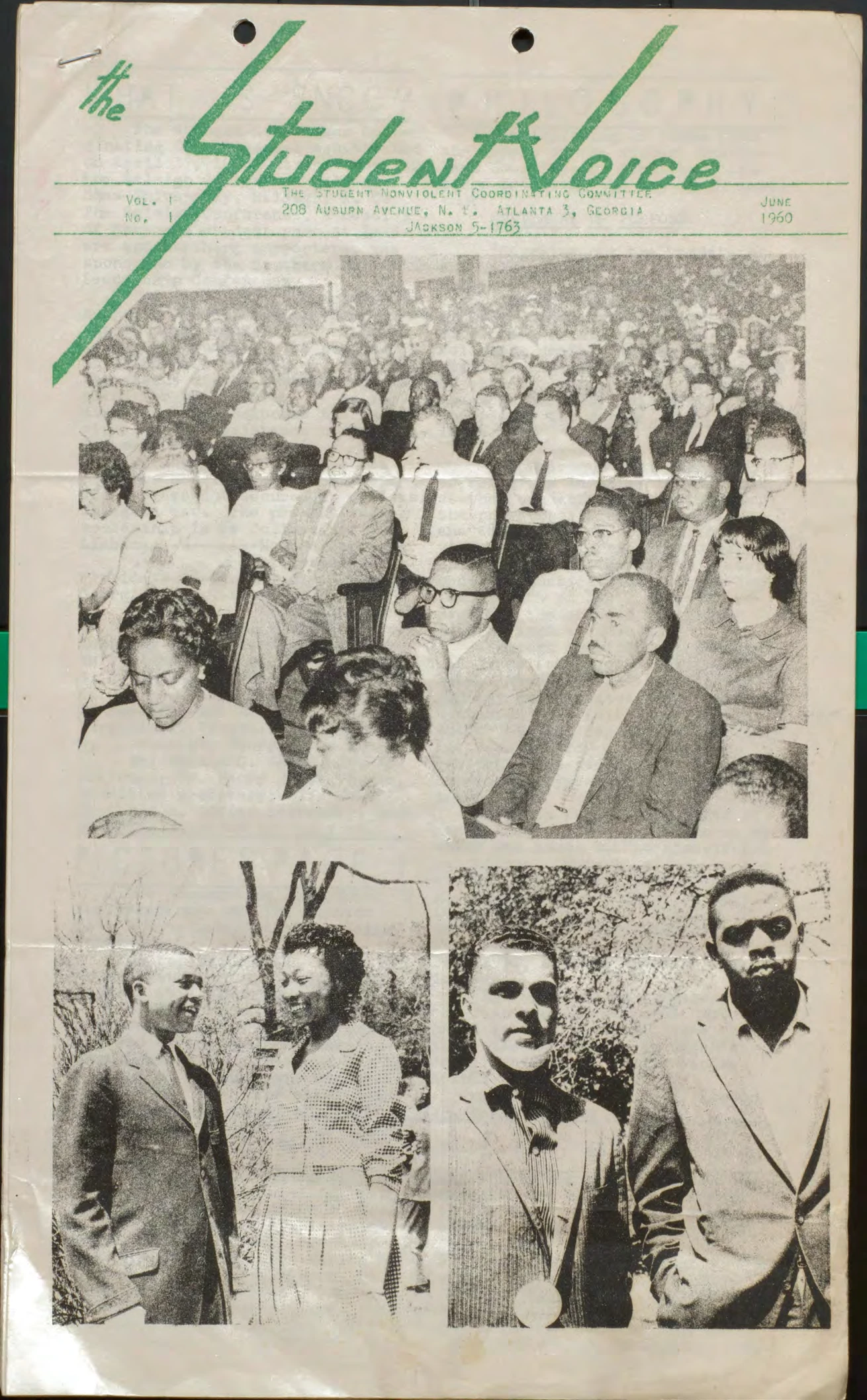
SNCC began publishing The Student Voice to carry reports from protest areas, share ideas, and draw attention to emergencies in local campaigns. Students who had been organizing separately now had a way to speak to one another and to supporters beyond their own towns. The newsletter’s first issue described the committee as self-directing, while welcoming help from other groups.
Baker also challenged adults to recognize the scale of what the students were demanding. In her article “Bigger Than a Hamburger,” published soon after Shaw, she explained that their ambitions reached far beyond being served at lunch counters. They wanted to end racial segregation and discrimination throughout American life. She welcomed their commitment to “group-centered leadership” and warned that even well-meaning adults could stifle them by becoming overprotective.
Building Power Across the Civil Rights Movement
Baker had been doing this kind of work long before the students arrived at Shaw. During the 1940s, she’d traveled throughout the South for the National Association for the Advancement of Colored People (NAACP), recruiting members and strengthening local branches. As its director of branches from 1943, she fought for local members to have a stronger voice in the organization. Later, she became president of its New York City branch and helped Black and Puerto Rican parents organize against discrimination in the city’s schools.
Her years of organizing also gave the younger activists access to people who had been fighting for change for decades. In 1960, Baker gave Bob Moses contacts for a trip through the South. One was Amzie Moore, a veteran Mississippi activist who wanted help registering Black voters. Their meeting helped open the way to SNCC’s voter-registration work in Mississippi, where local residents risked violent attacks and the loss of their livelihoods for trying to vote.
In 1964, Baker coordinated the Washington office of the Mississippi Freedom Democratic Party, supporting its challenge to Mississippi’s all-white delegation at the Democratic National Convention. Black citizens had been systematically denied the vote, and the Freedom Democrats demanded the right to represent them. The convention refused to replace the regular delegation with the Freedom Democrats.
Baker helped turn people shut out of power into people who could challenge it. She strengthened local NAACP branches, connected generations of activists, and helped students build an organization they could control. Those young organizers went on to fight for Black voting rights in communities where trying to register could cost someone their job or their life. Her influence multiplied as the people she supported organized others. The SNCC Digital Gateway, a history project built with movement veterans, puts her contribution plainly: “There would not have been a SNCC without Ella Baker.”
Related reading: Fannie Lou Hamer and the fight to represent Mississippi.
Sources and Further Reading
- Ella Baker, March 23, 1960 conference memorandum, and the conference invitation.
- Ella Baker, “Bigger Than a Hamburger,” The Southern Patriot, May 1960.
- Ella Baker, oral-history interview with Eugene Walker, September 4, 1974, and interview excerpts with Emily Stoper, December 1966.
- Shaw conference recommendations, April 1960, and The Student Voice, first issue, June 1960.
- SNCC Digital Gateway: Ella Baker; Greensboro sit-ins; SNCC’s founding; students becoming organizers; Baker’s NAACP organizing; the story of SNCC.
- Ella Baker, Stanford’s Martin Luther King, Jr. Research and Education Institute, and its Wyatt Tee Walker biography; Baker’s July 20, 1964 letter to convention delegates.
- Carol Mueller, “Ella Baker and the Origins of ‘Participatory Democracy,’” reprinted in The Black Studies Reader (2004), p. 79. Discusses Baker’s leadership and treatment at SCLC (p. 86), and reproduces the full pullquote (p. 79), citing Moving the Mountain (1980), p. 55.
- Barbara Ransby, Ella Baker and the Black Freedom Movement: A Radical Democratic Vision (2003). Further reading.
Image Sources
- Greensboro lunch counter at the Smithsonian, photographed in 2008 by Mark Pellegrini. CC BY-SA 2.5; resized.
- Estey Hall, Shaw University, photographed October 5, 2011, by Daderot. Photographer’s public-domain dedication. A modern view of the campus, not a photograph of the conference or an identification of its meeting room.
- The Student Voice, first issue, June 1960. Complete cover scan from the Civil Rights Movement Archive. Published in the United States in 1960 without a copyright notice; converted to WebP.
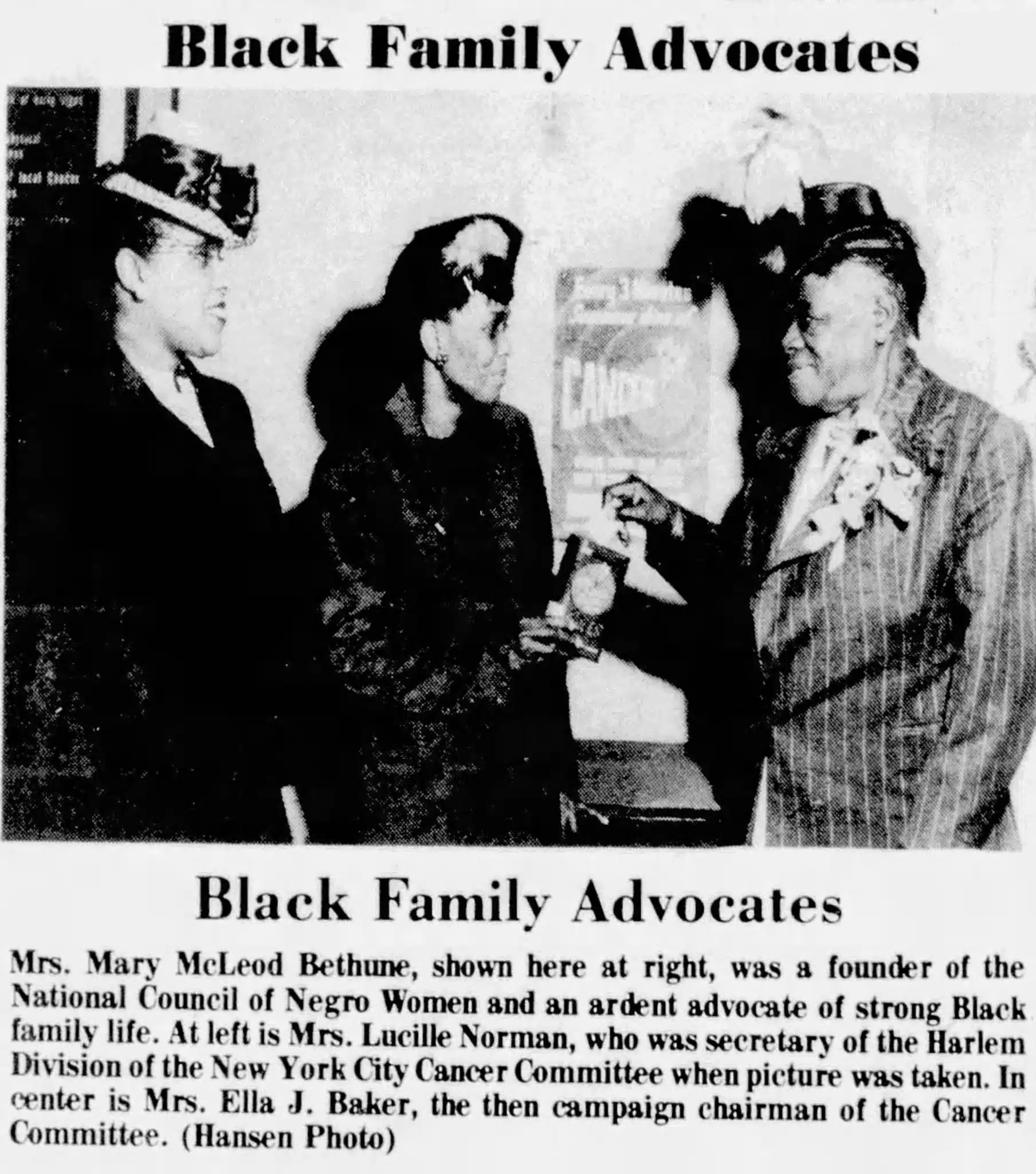
- Baker with Lucille Norman and Mary McLeod Bethune. Hansen photograph of Harlem health-campaign organizers, reprinted in New York Amsterdam News, November 26, 1977, p. 16. Photograph date unknown. Commons identifies the clipping as U.S. public domain through publication without a copyright notice.

Keri is a blogger and digital marketing professional who founded Amazing Women In History in 2011.


Beyond the article
The Conversation
Share your perspective, ask a question, or add something to the story.
2 responses | Leave a comment