
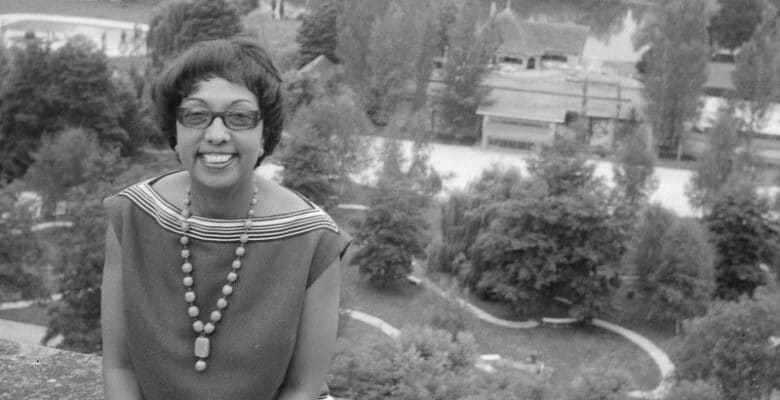
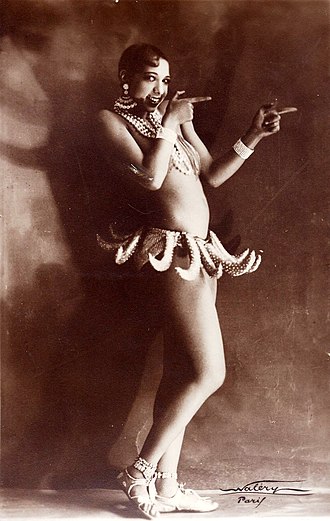
When the marvelous Josephine Baker stepped onto the stage of Paris’s Folies Bergere in the 1920s, her sequined costumes and electric performances hypnotized all of Europe, leaving her audiences in an unbreakable trance. But behind the glitz and glamour was a fearless woman who would soon wield her fame not just for entertainment, but for espionage, resistance, and justice.
Baker, born into poverty in segregated St. Louis in 1906, had every reason to fold under the weight of a world that seemed designed to break her. Between the ages of 8 and 10, she was out of school, spending most of her free time supporting her family. As a child, she developed a taste for flamboyance, allowing her to dance her way out of America’s Jim Crow South and into the heart of France, where she became a jazz-age icon and a naturalized citizen. Paris loved her and in turn, she gave everything she could to defend this beloved country against the strict Nazi regime.
Her fame gave her an advantage that most resistance fighters lacked. At her fingertips, Baker had access to the most luxurious ballrooms, embassies, and high-ranking dinners Paris had to offer, and she used them like a weapon. Her career allowed her to write invisible ink on her sheet music notes, and she discreetly kept these hidden within her lingerie. Her dazzling personality allowed her to charm officials by day and smuggle secret intelligence by night, traveling miles across Europe under the guise of performance tours. Her fame was her cover, and very few suspected the world’s most glamorous entertainer of espionage.
Unfortunately, Baker paid a price. Touring for the Resistance took a toll on her health; she suffered a miscarriage, multiple infections, and nearly died throughout it all. Through these turbulent times, she persisted. In one of the most extraordinary acts of defiance, Baker sheltered refugees in her castle in the Dordogne countryside, feeding and clothing them with her own dwindling funds.
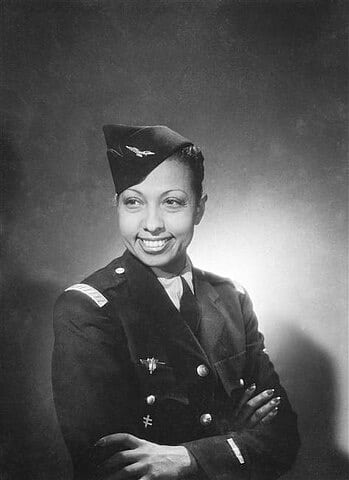
Her unwavering bravery and commitment earned her the Croix de Guerre and the Rosette de la Resistance, which is one of France’s highest military honors. In the postwar years that followed, her homeland still saw her primarily as a curiosity, not a hero. When she returned to the United States in the 1950s, she found it the same as she had left it, with intense segregation and unjust. Once again, Josephine knew she had to fight, not with weapons, but with her voice. She refused to perform for segregated audiences, and she marched beside Dr. Martin Luther King Jr. at the 1963 March on Washington, the only woman who was asked to speak that day.
As time passes, Josephine Baker still remains a name that’s often associated with feathers and jazz, but she deserves much more than that. She was a courageous spy, a fearless soldier, a heroic civil rights activist, and a loving mother to twelve adopted children from around the world, known as her “rainbow tribe”. She saw this as her final act of protest against racism.
In 2021, she was immortalized in the Pantheon in Paris, which is known as France’s resting place for heroes. Josephine Baker was not just a vibrant jazz star, but also a revolution draped in silk, who danced her way through the darkness in history with defiant light. Perhaps that is the truest form of heroism, to fight not for the applause, but for the possibility of a freer world.

Logan Rae is a History and English student at McMaster University with a passion for storytelling, research, and uncovering hidden narratives. She writes across genres, from historical fiction to cultural commentary, and contributes to her university newspaper. Logan is especially interested in journalism, education, and the intersection of history and identity, with aspirations of one day publishing her own book.

Leave a Reply