
Juanita Jackson Mitchell was a trailblazing civil rights lawyer who broke through racial and gender barriers to become the first African American woman to practice law in Maryland. Born into a family synonymous with civil rights activism, she carried forward a legacy of fighting for justice while forging her own remarkable path in the legal profession.
The Early Life of Juanita Jackson
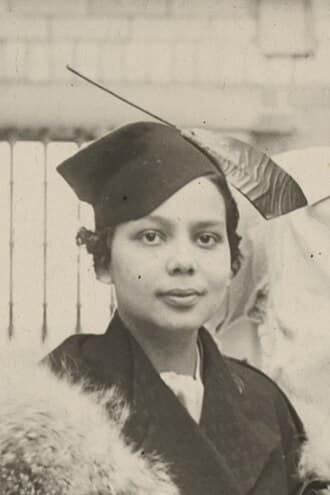
Juanita Jackson Mitchell was born on January 2, 1913, in Hot Springs, Arkansas, to Kieffer Albert Jackson and Dr. Lillie Mae Carroll Jackson. Her family moved to Baltimore when she was young, where she would spend most of her life fighting the racism and segregation that she once described made life a “living hell” for Black Americans in Maryland.
Growing up in the Jackson household meant being immersed in civil rights activism from an early age. Her mother, Dr. Lillie Mae Carroll Jackson, was a legendary figure in the civil rights movement, known as “Dr. Lillie,” “Ma Jackson,” and the “mother of the civil rights movement.” As president of the Baltimore branch of the NAACP from 1935 to 1970, Lillie Jackson pioneered the tactics of non-violent resistance that would later be used by Martin Luther King Jr. and others during the early civil rights movement. Under her leadership, the Baltimore NAACP became the largest branch in the United States, with a peak membership of 17,600.
Education and Early Activism
Despite the barriers facing African Americans in higher education, Juanita excelled academically. She attended Frederick Douglass High School and Morgan State College before graduating cum laude from the University of Pennsylvania with a B.S. in education in 1931. Notably, she and her sister lived with relatives in Philadelphia while attending university because the University of Maryland and the Maryland Art Institute would not accept Black students at the time.
Four years later, she earned her M.A. in sociology from the University of Pennsylvania. During her studies, she worked extensively with the Bureau of Negro Work and the Methodist church, traveling throughout the United States teaching courses in race relations and speaking about civil rights issues.
A Family Legacy of Activism
In the early 1930s, Juanita and her mother founded the Baltimore Citywide Young People’s Forum, a civil rights organization that also helped find jobs for Black Americans during the Great Depression. The forum conducted grassroots campaigns, including the influential “Buy Where You Can Work” campaign of 1931, which aimed to end racial segregation in employment.
From 1935 to 1938, Juanita served as special assistant to Walter White, NAACP Executive Secretary, where she held the position of National Youth Director. In this role, she organized and developed programs for the organization’s Youth and College Division, helping to build the next generation of civil rights activists.
Breaking Barriers in Law
Juanita’s most significant professional achievement came in 1950 when she became the first African American woman to graduate from the University of Maryland School of Law and the first to be admitted to the Maryland bar. This accomplishment was particularly meaningful given that the same institution had refused to admit Black students just two decades earlier.
Her entry into the legal profession came at a crucial time in the civil rights movement. In 1938, she had married Clarence M. Mitchell Jr., who would become known nationally as a civil rights activist and was dubbed “the 101st Senator” for his influential work in Washington, D.C.
Legal Victories and Civil Rights Campaigns
As a civil rights lawyer, Juanita Jackson Mitchell fought discrimination in courtrooms across Maryland. She served as legal counsel for the NAACP, working on suits to eliminate segregation in municipal recreation facilities, restaurants, and public schools throughout Baltimore City and Maryland. Her legal battles resulted in the integration of city agencies, forcing them to hire Black police officers, social workers, librarians, and teachers.
Mitchell is credited with filing the lawsuits that made Maryland the first southern state to desegregate its school system following the 1954 Supreme Court decision in Brown v. Board of Education of Topeka, Kansas. Her work was instrumental in implementing this landmark ruling at the state level.
Among her notable cases was Robert Mack Bell v. Maryland, which resulted from student attempts to desegregate Maryland’s restaurants. She also worked on the “Veney Raid” cases, which ended mass searches of private homes without warrants. Additionally, Mitchell filed lawsuits in the early 1950s that led to the desegregation of Sandy Point State Park, Fort Smallwood Municipal Park Beach, and Baltimore City swimming pools. Her victory at Sandy Point State Park set a legal precedent when the Supreme Court later upheld that segregation of state facilities was unconstitutional, extending 14th Amendment protections to state beaches and recreational facilities.
Political Recognition and Voter Registration
Mitchell’s impact extended beyond the courtroom into the political arena. She directed significant voter registration campaigns, including a march on Annapolis in 1942 with 2,000 citizens demanding the repeal of Maryland’s “Jim Crow” laws. That same year, she directed the first city-wide “Register and Vote” campaign, resulting in 11,000 new voter registrations. In 1958, her “Register to Vote” campaign added over 20,000 new registrations to the books.
Her political work earned recognition from three U.S. presidents. President Franklin D. Roosevelt appointed her to the White House Conference on Children in 1940. President John F. Kennedy named her to the White House Conference on Women and Civil Rights in 1963. In 1966, President Lyndon B. Johnson appointed her to the White House Conference “To Fulfill These Rights,” which focused on finding solutions for African Americans concerning economic security, education, and justice.
Personal Commitment and Family Legacy
Mitchell often spoke about the total commitment she and her husband had to the civil rights movement. As she once said, “My husband and I had an almost total commitment to the struggle for freedom. We were gone all the time, either at rallies or for court cases. We would meet at church meetings to organize the people. We had a sense of urgency.”
This dedication to civil rights became a family tradition. Mitchell was the mother of two Maryland State Senators: Michael B. Mitchell and Clarence M. Mitchell III. Her grandson, Keiffer J. Mitchell Jr., served on the Baltimore City Council and ran for Mayor of Baltimore in 2007, continuing the family’s legacy of public service.
Later Years and Lasting Impact
Even in her later years, Mitchell remained committed to her community. In April 1985, at age 72, after several Black teenagers were murdered in Baltimore shootings, she helped organize community meetings that became the “Stop the Killing Campaign.”
In 1987, Mitchell was inducted into the Maryland Women’s Hall of Fame alongside her mother, recognizing their combined contributions to civil rights and women’s advancement in Maryland.
Tragedy struck in November 1989 when Mitchell fell down a flight of stairs, leaving her quadriplegic. While undergoing therapy, she suffered a stroke, her second since 1985. Juanita Jackson Mitchell died in Baltimore of a heart attack and stroke in July 1992 at the age of 79.
Recognition and Legacy
The NAACP has honored Mitchell’s contributions by creating the “Juanita Jackson Mitchell Award for Legal Activism,” presented annually at the National Convention to NAACP units for exemplary legal redress committee activities.
Senator Barbara A. Mikulski, a Maryland Democrat, captured Mitchell’s spirit perfectly when she said, “She broke barriers. She didn’t see barriers as obstacles. She saw them as vistas that she could stand on top of and see new opportunities.”
As Mitchell herself reflected, “I am an old freedom fighter. I came up in that tradition.” Her life exemplified the power of combining legal expertise with grassroots activism, proving that the fight for civil rights required both courtroom victories and community organizing.
Juanita Jackson Mitchell’s legacy reminds us that progress often comes from those willing to be first: first to break down doors, first to challenge unjust systems, and first to imagine a more equitable future. Her pioneering work in law and civil rights paved the way for countless others while proving that barriers, no matter how formidable, could be overcome with determination, skill, and an unwavering commitment to justice.
Sources
- “Juanita Jackson Mitchell.” Maryland State Archives. Maryland State Archives, 2011. Web. https://www.msa.md.gov/megafile/msa/speccol/sc3500/sc3520/002300/002306/html/2306bio.html
- “Lillie Mae Carroll Jackson.” Wikipedia: The Free Encyclopedia. Wikimedia Foundation. Web.
- Maryland Life. “Juanita Jackson Mitchell.” Maryland Life, October 2011.
- Mitchell, Juanita Jackson. Personal quotes and interviews as documented in Maryland State Archives materials.
- “NAACP Legal Awards.” National Association for the Advancement of Colored People. NAACP National Office.
- Robert Mack Bell v. Maryland. Legal case documentation and analysis.
- “Veney Raid Cases.” Legal documentation, Maryland State legal archives.

Keri is a blogger and digital marketing professional who founded Amazing Women In History in 2011.


Leave a Reply