

Louise Otto-Peters helped build Germany’s organized women’s movement by insisting that women speak and act for themselves. In 1849, she founded a newspaper that invited them to do just that, including working women who had never written for publication. When the government moved to exclude women from newspaper editorship, she found a way to keep publishing elsewhere.
Women’s Work Belongs in the Debate
In 1848, revolutions swept across Europe. Germany was still divided into separate states, and reformers demanded constitutions, political freedoms, and a united country. Women joined meetings, organized associations, and supported the struggle, but the new parliaments remained male territory.
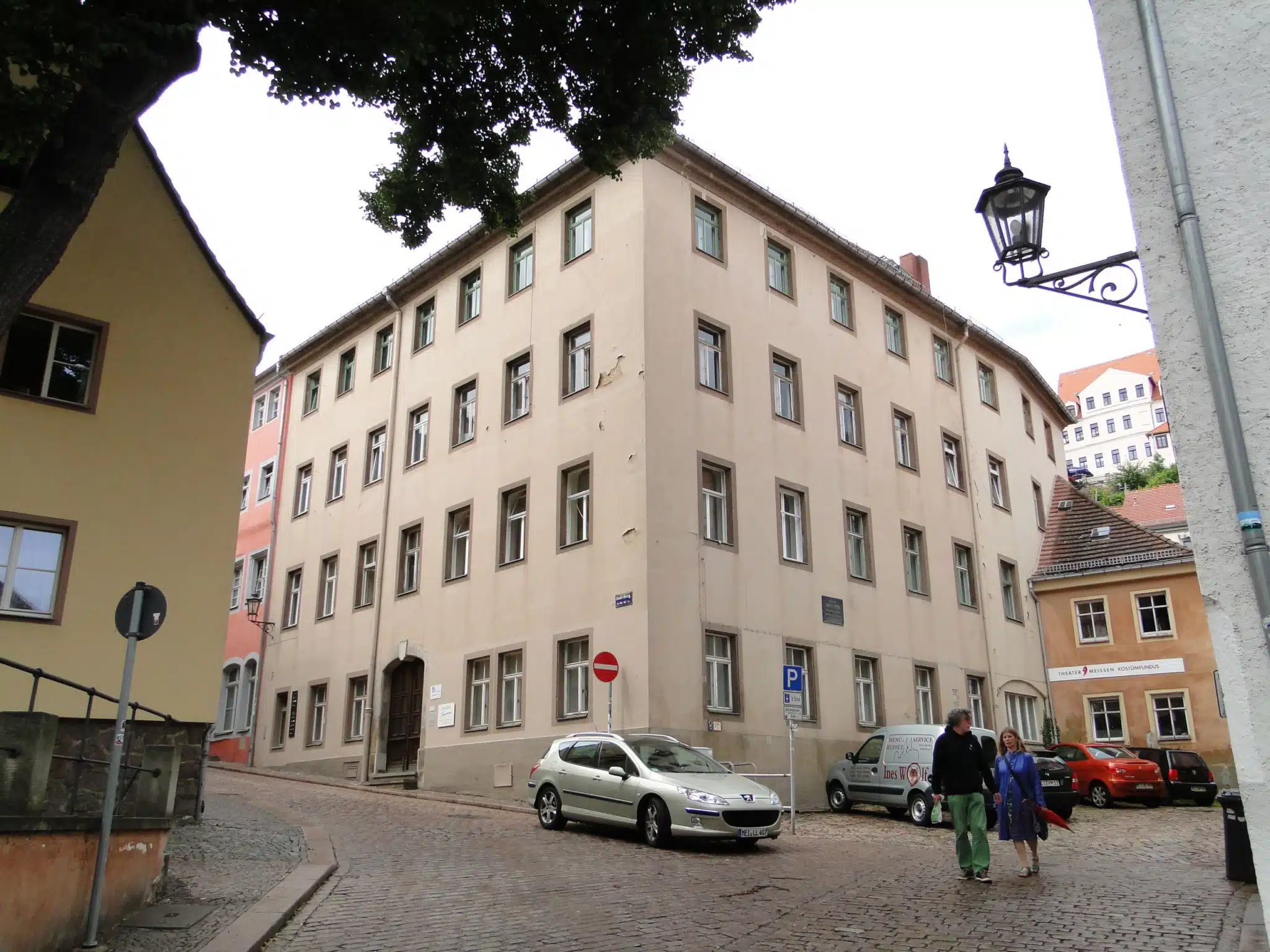
Louise, then known as Louise Otto, was already a novelist and journalist living in Meißen, in the Kingdom of Saxony. She supported the revolution, but she also challenged the men who hoped to remake society.
In May 1848, she published an open letter to Saxony’s minister Martin Gotthard Oberländer, his labor commission, and working men. They couldn’t improve working conditions properly, she argued, while ignoring women’s work. Women crowded into too few occupations, driving wages down. Better pay for husbands wouldn’t solve the problems of widows and unmarried women, or justify making women dependent on men.
Her intervention won a hearing. Oberländer and another minister met with her and asked for proposals. Louise raised women’s right to earn a living and the need for childcare. She also organized meetings about working women’s conditions.
Now she wanted a newspaper through which women could make their own concerns public.
A Newspaper Women Could Help Write
Louise launched the Frauen-Zeitung, or Women’s Newspaper, on April 21, 1849. Its motto announced her ambition:
I recruit female citizens for the realm of liberty.
Louise Otto, motto of the Frauen-Zeitung, 1849. Translation by Thomas Dunlap.
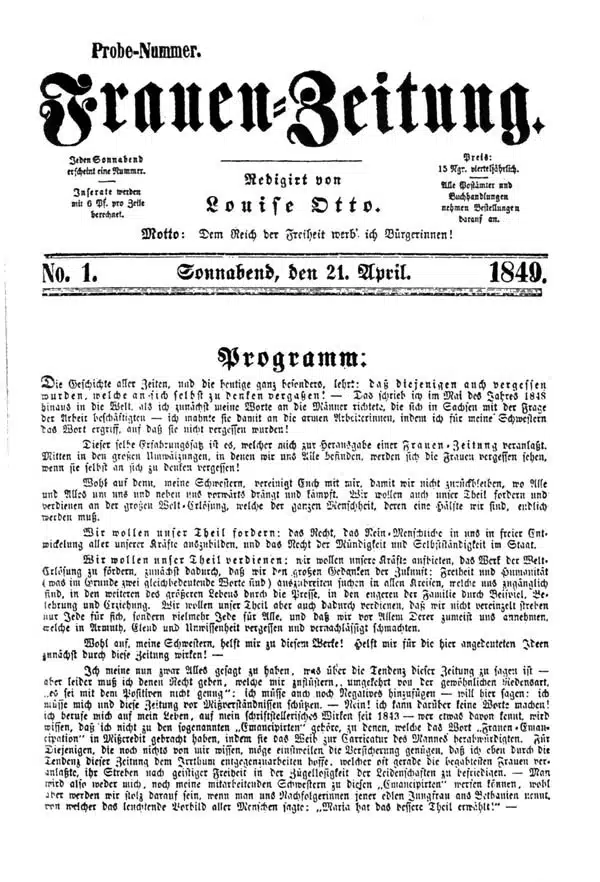
She edited it from Meißen. Printer and publisher Theodor Haffner produced it in Großenhain, while a Leipzig bookseller handled distribution through the book trade. Readers could subscribe to the weekly paper for three months at a time.
In her opening editorial, Louise warned that “those who forget to think of themselves will be forgotten!” She invited both women and men to contribute, but made a particular appeal to poor working women. They didn’t need elegant prose. If they sent accounts of their circumstances, she would help prepare them for publication.
The paper offered more than Louise’s opinions. It carried letters, news of women’s associations, and reports on educational projects, including a women’s college in Hamburg. Readers could learn what women elsewhere were attempting and contribute to the discussion themselves.
Women campaigning for change also disagreed with one another. The writer Louise Aston rejected marriage as a form of ownership and defended relationships outside it. Louise Otto challenged women’s exclusion from politics, but she supported marriage and criticized Aston’s views on sexual freedom. In September 1849, her newspaper published criticism of Aston, including a poem by Emilie Spreu.
The government, meanwhile, was concerned about her politics.
Saxony Reserves Editorship for Men
The newspaper began publishing while the revolution was still being fought. In May 1849, an uprising in Dresden, Saxony’s capital, was defeated. The authorities pursued revolutionaries and their supporters, and Louise’s paper reported on imprisoned participants in the fighting in Saxony and Baden.
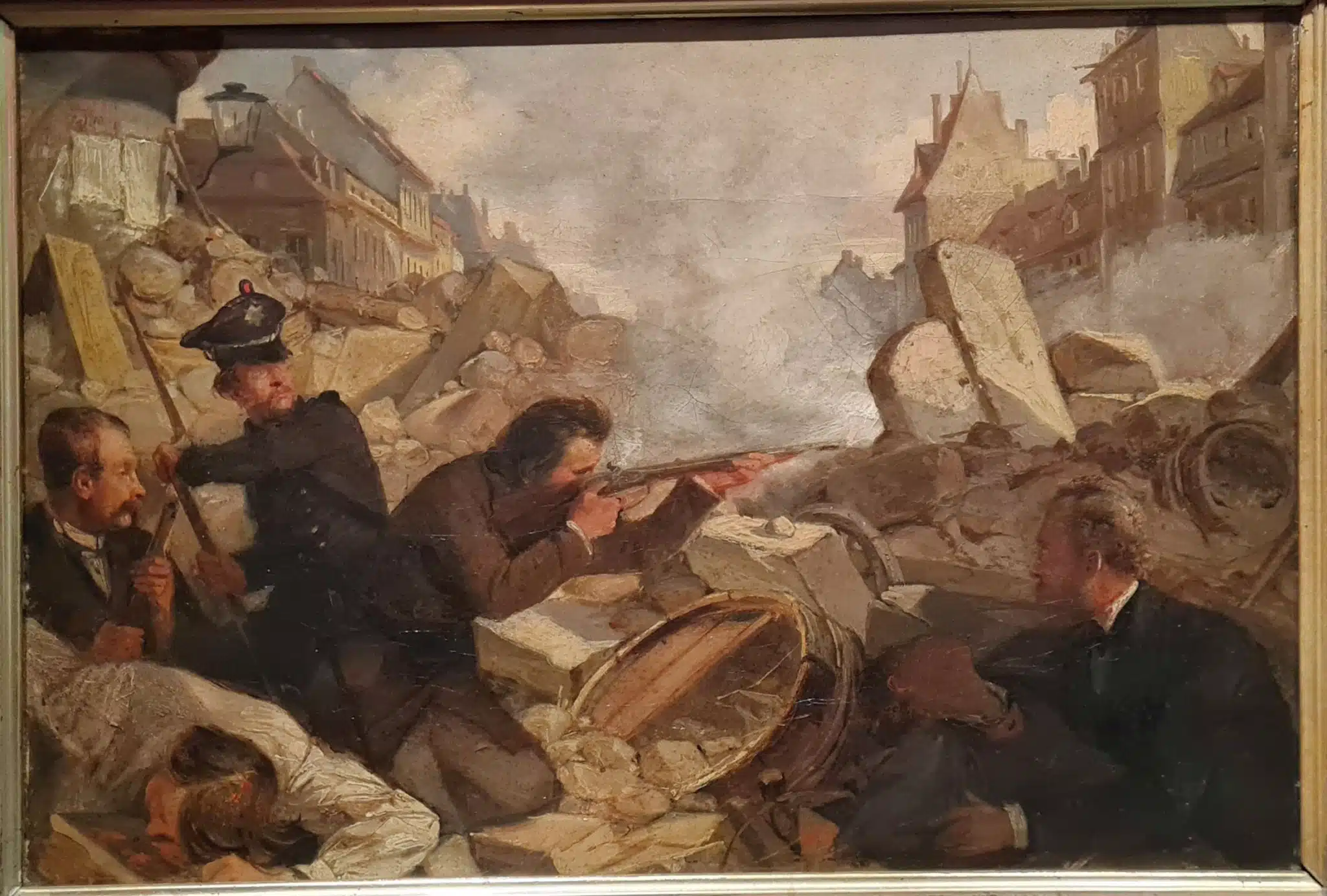
In July, officials confiscated an issue containing those reports. A year later, police searched her home and seized letters from people who shared her political views.
Then came a restriction that struck directly at her job. In December 1850, Louise criticized a proposed Saxon press law that allowed only men to be the editors legally responsible for a newspaper’s contents. Women couldn’t qualify even as coeditors.
She pointed out the convenient flexibility of the word citizen. When citizens were granted voting rights, women weren’t included. When citizens owed taxes, women certainly were.
Despite her objection, Saxony would go on to adopt the male-only rule. Louise ended the paper’s Saxon run before it took effect.
In her farewell on December 31, 1850, she said she could have met the other requirements, including providing a financial guarantee. The condition she couldn’t meet was being a man.
Keeping the Paper Alive Comes at a Cost
The farewell wasn’t the end. Supporters urged Louise to continue, and on February 5, 1851, the Frauen-Zeitung returned, published in Gera, in the neighboring principality of Reuß.
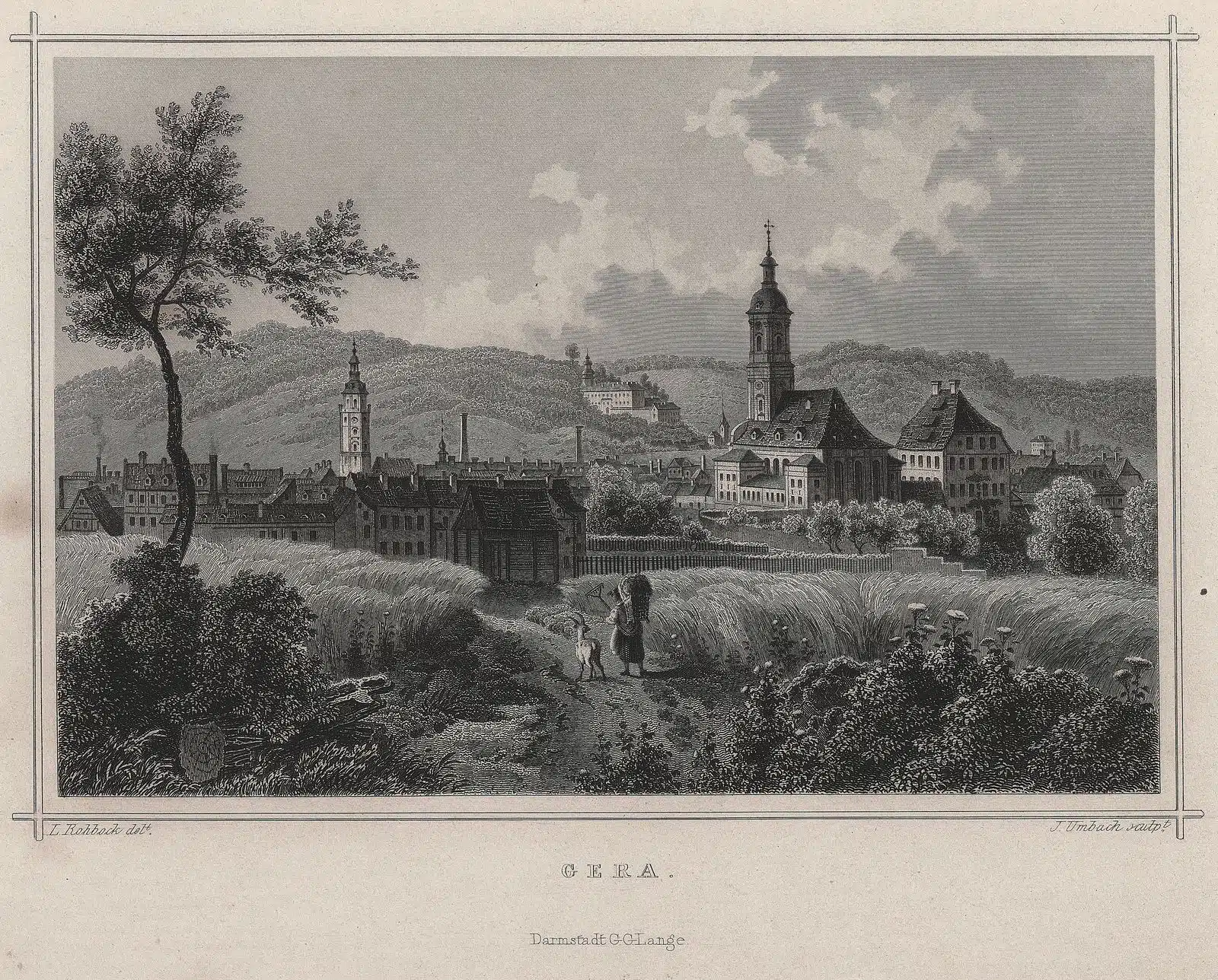
Gera lay outside Saxony’s jurisdiction, but Louise still lived in Meißen. She told readers that her distance from the printing office was the reason publisher Adolf Hofmeister’s firm would now take formal responsibility for editing. Louise remained the paper’s named founder and continued writing. She also explained that the political climate meant she would concentrate more on social questions.
Saxon officials didn’t simply lose interest at the border. The interior minister warned the government in Gera that the newspaper encouraged women toward revolution. Hofmeister was questioned, but the paper continued.
The paper stopped appearing in June 1852, for reasons that remain unclear. Early in 1853, a new publisher in Leipzig issued a continuation called Deutsche Frauen-Zeitung. Louise worked on it as an editorial contributor. The new paper was more literary and less committed to her women’s rights program. She clashed with the publisher over its contents and his treatment of her. This final attempt ended in July.
Women Build an Organization of Their Own
Louise continued publishing novels and articles on music and theater. She married fellow writer August Peters in 1858 and later settled in Leipzig. There, she edited the arts and literature section of the Mitteldeutsche Volks-Zeitung, a newspaper her husband published, and developed friendships with women campaigning for better education.
In 1865, she helped establish a women’s education association in Leipzig. It called a conference that October, bringing together supporters of women’s education and employment. At the conference, Louise and fellow campaigners founded the General German Women’s Association. Its members elected her chair.
Education and training for paid work were central to its program: women needed the means to support themselves as well as the right to speak.
By 1866, Louise and teacher Auguste Schmidt were producing the association’s journal, Neue Bahnen, or New Paths. Saxon law still prevented Louise from being named its legally responsible editor. Even so, the journal carried news of women’s work and organizing across towns and borders. She remained the association’s chair until her death in 1895.
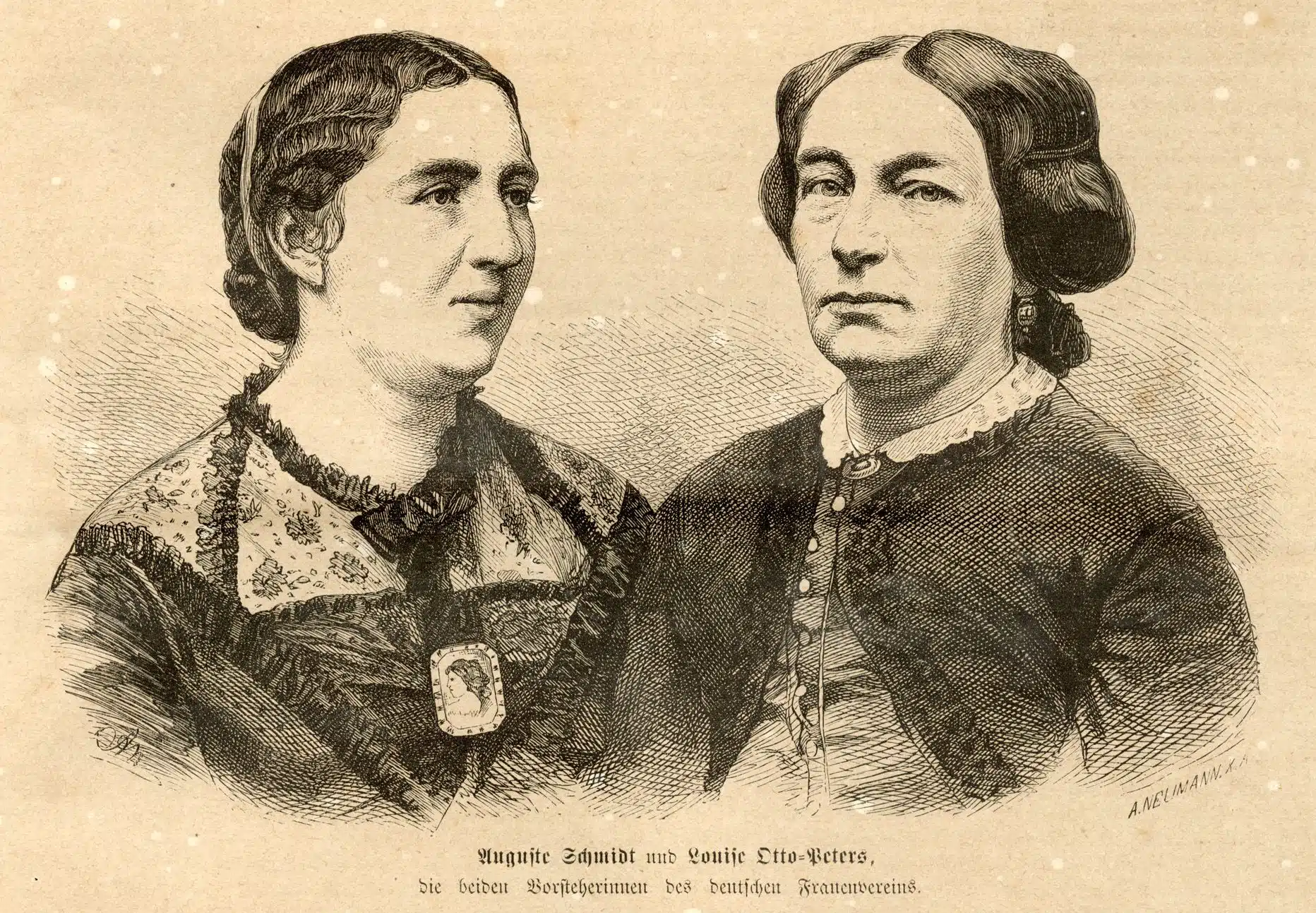
The association also helped women study abroad through scholarships. One recipient, Anna Kuhnow, qualified as a doctor in Zurich and opened a practice in Leipzig. By the end of Louise’s life, a woman her association had helped train was caring for her as her doctor.
Sources and Further Reading
- Louise Otto, founding program of the Frauen-Zeitung, April 21, 1849. English translation by Thomas Dunlap, German History in Documents and Images.
- Louise Otto, “Adresse eines Mädchens,” 1848. German text, Louise-Otto-Peters Society.
- Louise-Otto-Peters Society, chronology of the Frauen-Zeitung.
- SLUB Dresden, “100 Jahre Frauenwahlrecht: Louise Otto Peters‘ Frauen-Zeitung jetzt in den Digitalen Sammlungen der SLUB,” January 15, 2019.
- Sandra Berndt, “Louise Otto-Peters (1819–1895): Ein Kurzporträt,” Aus Politik und Zeitgeschichte, 2019.
- Barbara Beuys, Die neuen Frauen: Revolution im Kaiserreich 1900–1914, 2014, pp. 18–20.
- Johanna Ludwig, “Louise Otto-Peters,” Sächsische Biografie, 2007.
- Mechthilde Vahsen, “Louise Otto-Peters,” Bundeszentrale für politische Bildung, 2009.
- Louise Otto, “Abschiedswort,” 1850. Modern German transcription, Demokratisches Deutschland.
- Stiftung Archiv der deutschen Frauenbewegung, “#DieFrauenVon1848,” part 9.2: Louise Aston and marriage.
- FrauenMediaTurm, “Louise Astons Freischärler,” on the criticism in the Frauen-Zeitung.
- Stefanie Knop, “Emanzipation im 19. Jahrhundert,” section 3, quoting Louise’s 1851 explanation of the Gera arrangement.
- Ute Tartz, “Anna Marie Kuhnow,” University of Leipzig, 2013.


Beyond the article
Join the Conversation
Share your perspective, ask a question, or add something to the story.