

Lucy Parsons organized working women, raised money to fight death sentences, and led hungry Chicagoans into the streets to demand jobs. A seamstress and anarchist, she wanted workers to own the factories and the wealth their labor created. When her husband was sentenced to hang, she traveled the country defending him and their movement. Decades later, police were still arresting her for leading protests.
A seamstress organizes Chicago’s working women
Lucy grew up in Texas, where she worked as a seamstress and domestic servant. Historian Jacqueline Jones traces her birth to Virginia in 1851. The man who enslaved Lucy and her mother, Charlotte, took them to Texas during the Civil War. Lucy later described herself as the daughter of Mexican and Native American parents.
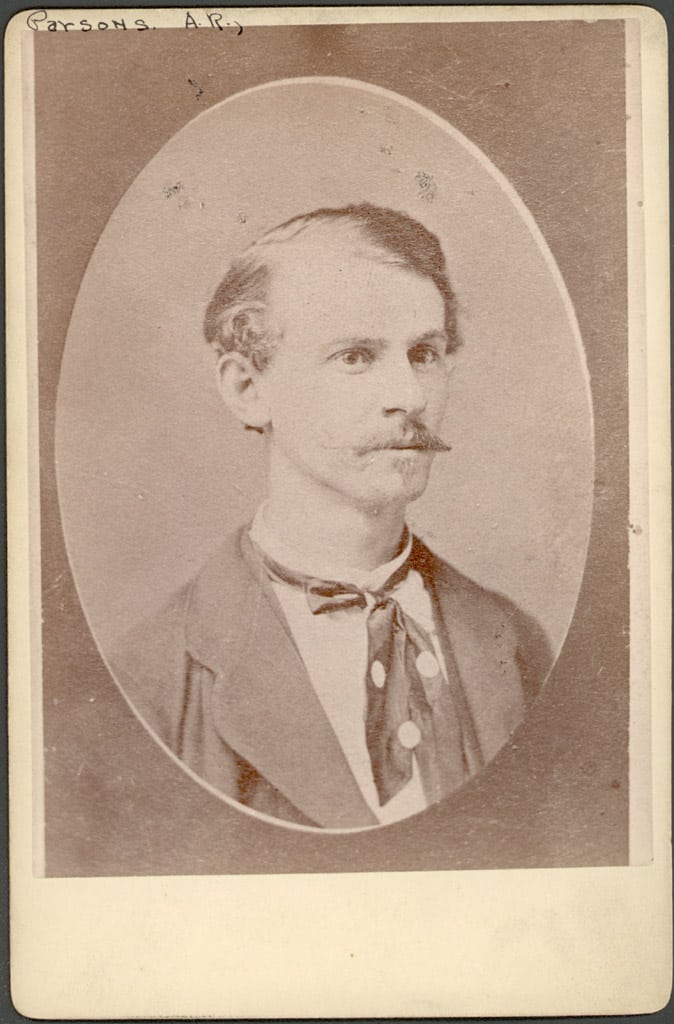
In Texas she met Albert Parsons, a former Confederate soldier who had begun organizing Black men to register and vote. They married and moved to Chicago. During the railroad strike of 1877, Albert spoke at meetings of workers protesting wage cuts. He lost his printing job, and other employers wouldn’t hire him. Lucy opened a dress shop to support them, with Albert handling customers’ clothing orders.
Lucy also helped other women organize. In 1878, she joined the founders of Working Women’s Union No. 1, which welcomed seamstresses, domestic workers, and women who kept house without drawing a wage.
Both Lucy and Albert became anarchists. They wanted workers to own what they produced and decide for themselves how to exchange it, without bosses or a government directing them. For Lucy, unions were a way to learn how to build that society.
Her writing was as uncompromising as her politics. For the first issue of Albert’s newspaper, The Alarm, in 1884, she addressed the unemployed men dismissed as “tramps.” How could a man spend his life making things worth thousands of dollars and still go hungry? She described worn-out shoes and bare boards to sleep on, while the rich lived behind plate-glass windows. She urged him to take revenge. Her final instruction was blunt:
Learn the use of explosives.
Lucy Parsons, “A Word To Tramps,” 1884
By 1886, Lucy and fellow organizer Lizzie Holmes were helping Chicago’s sewing women campaign for an eight-hour workday. Many workers wanted to cut their day from ten hours to eight without losing pay. Across the city, strikes brought repeated clashes with police, including shootings.
On May 3, strikers clashed with replacement workers leaving a Chicago factory. Police fired their guns into the crowd, killing at least two strikers. Anarchists called a meeting the following evening to protest the killings.
The May 4 meeting near Haymarket Square was peaceful. Albert spoke, and Chicago’s mayor listened to the speeches before leaving. But when police moved in to disperse the remaining crowd, someone threw a bomb into their ranks. Police opened fire. Seven officers and an unknown number of civilians died from the explosion and gunfire. The bomber’s identity remains unknown.
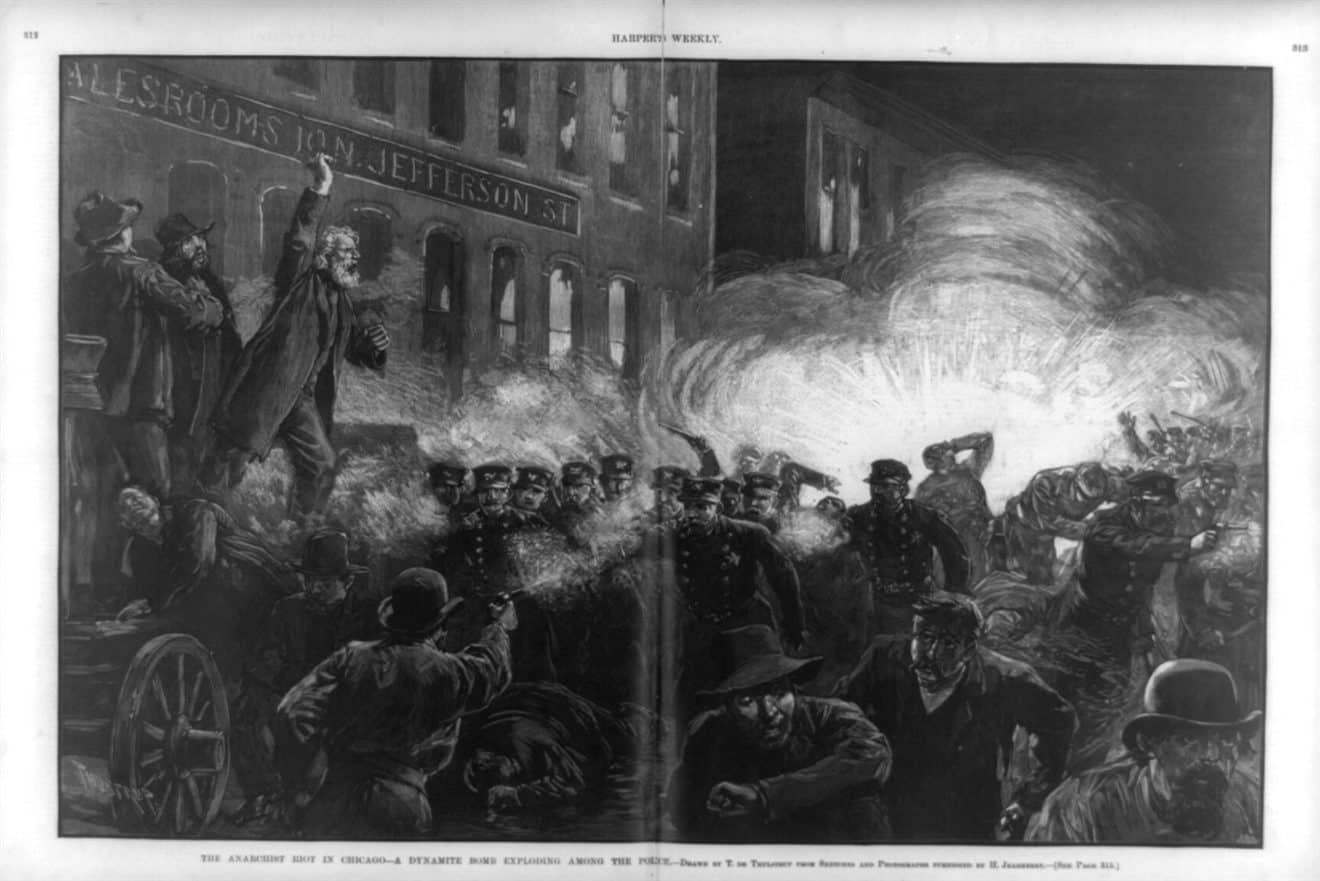
Prosecutors charged eight anarchists, including Albert, with murder, arguing that their speeches and writings had encouraged the attack. They even introduced Lucy’s article about explosives as evidence, though they didn’t charge her with the murder. The jury convicted all eight men. Seven were sentenced to death; the eighth, Oscar Neebe, received 15 years in prison.
Traveling the country to fight the death sentences
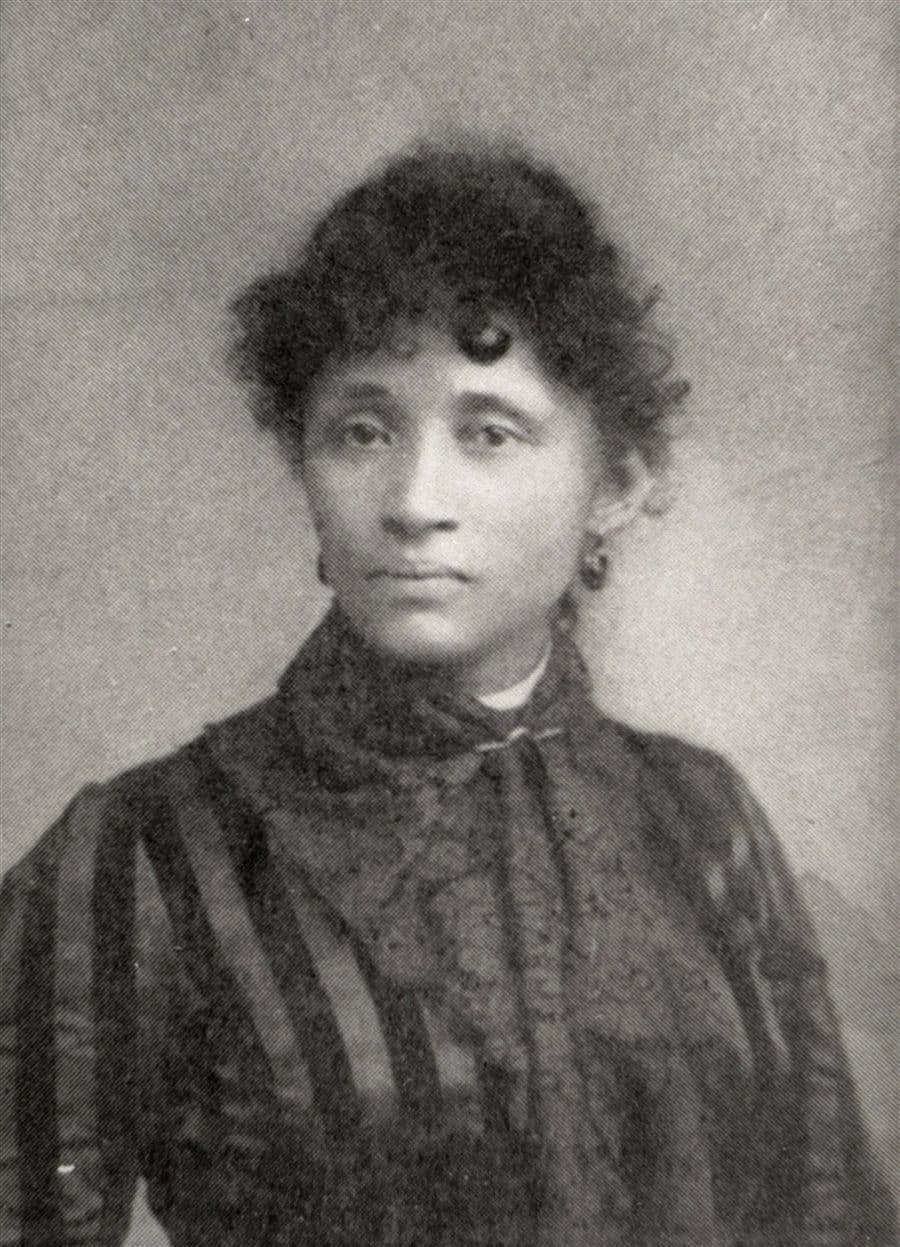
The trial had exhausted the defense fund. To pay for an appeal, Lucy set out on a speaking tour in October 1886, traveling by day, lecturing at night, and selling pamphlets. She defended the men’s revolutionary goals while challenging the fairness of a trial before jurors who’d admitted their prejudice against them.
People listened. In New Haven, Connecticut, Yale students came through heavy rain to hear her and stayed afterward to ask questions. Her tour raised money for the defense. But in some cities, Lucy had to fight for the chance to speak at all.
In Columbus, Ohio, a supporter booked a hall for her March 1887 lecture, only to be told she couldn’t use it. The agent who managed the rental said he’d agreed to admit a local trades group, not anarchists. According to Lucy’s later account, she showed the agent the receipt: it said “association,” without naming any group. He offered to return the money, but wouldn’t give her the hall.
Lucy went to the mayor to ask him to keep order so the meeting could go ahead. Instead, he ordered her arrest.
An Ohio newspaper reported that she’d been abusive to him. Lucy disputed that account in a letter to the editor. She’d asked a public official for help and ended up locked up overnight for disorderly conduct. By the time a judge reduced her bail, she’d missed the lecture. As she told readers, “it is not I who am on trial, but free speech.”
Her campaign couldn’t save Albert. The appeal failed, and Illinois hanged him and three other men on November 11, 1887. Louis Lingg had died by suicide in jail, and the governor had reduced two other death sentences to life in prison.
Lucy kept putting the men’s case before the public. In 1889, she published and sold Life of Albert R. Parsons, collecting his speeches and an account of the labor movement. She included a sworn statement from a prospective juror: the man selecting people for jury duty had boasted that the defendants would hang.
In 1893, a new governor pardoned the three surviving prisoners, citing the jury selection and the judge’s conduct. Albert and the other executed men had been dead for nearly six years.
Insisting that unions organize women
Lucy continued organizing long after Albert’s death. In 1905, she joined union delegates in Chicago to help form the Industrial Workers of the World. The new union aimed to bring people in the same industry together, instead of separating them by trade or skill. Lucy told the delegates they couldn’t afford to leave women out: employers could use women’s lower wages to drive men’s pay down too.
“We have no ballot, but we have our labor.”
She urged the men in the room to “organize the women.” Women could also support a strike by refusing to shop with the employers involved. Chicago’s teamsters, the drivers who hauled goods through the city, were on strike. Lucy told the delegates she hadn’t spent a penny in the State Street stores they were fighting. She wanted other women to join the boycott and make the stores give in.
Lucy wanted workers to take ownership of their workplaces. When strikers walked out, she argued, their families soon needed help buying bread and coal while the owners kept the factories. She proposed that strikers stay inside and take control of the factories and machinery:
“My conception of the strike of the future is not to strike and go out and starve, but to strike and remain in and take possession of the necessary property of production.”
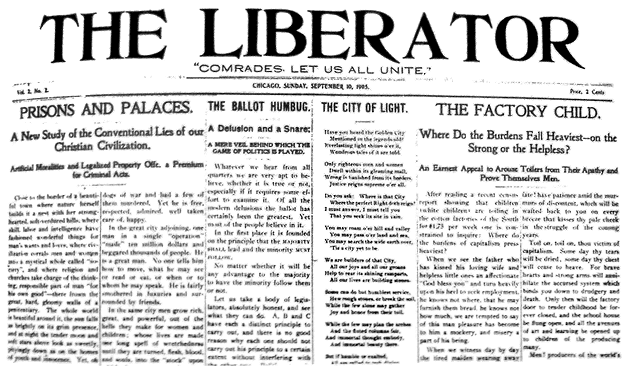
She had no faith that elections would give workers that power. Later that year, in “The Ballot Humbug,” she wrote, “The fact is money and not votes is what rules the people.”
Taking hunger into the streets
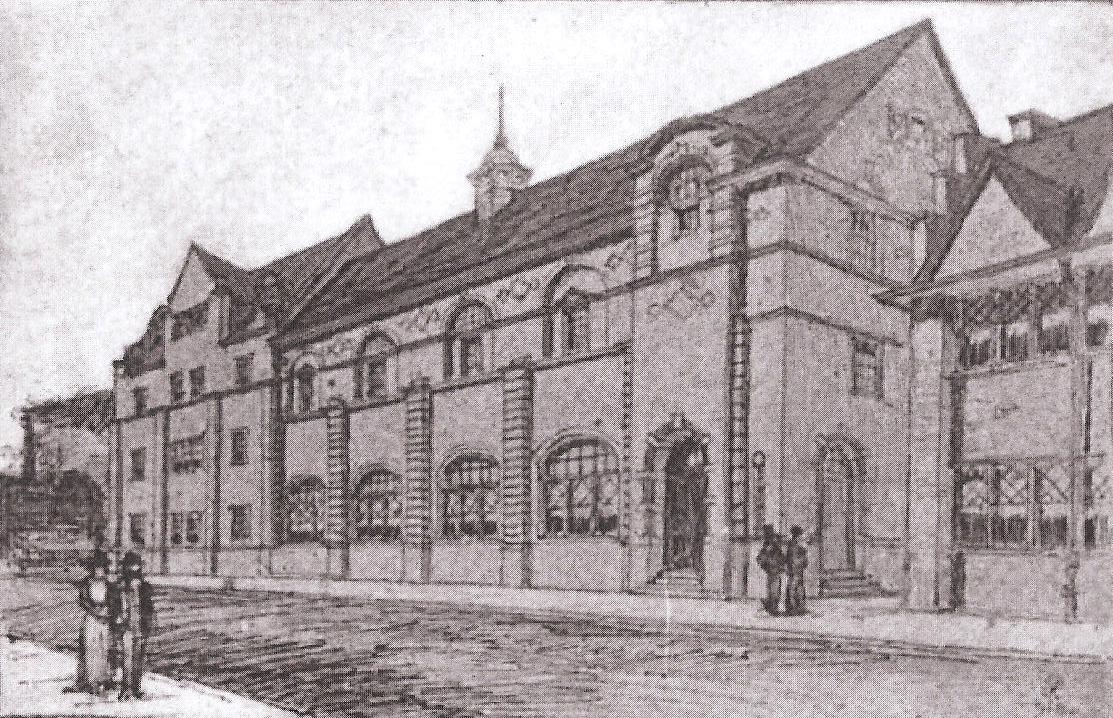
By the winter of 1915, work was scarce in Chicago, and a city commission reported that some children were too hungry to study. People looking for jobs met on Sundays at Hull-House, a neighborhood center on the city’s West Side. In January, Lucy urged them to take their demands into the streets. One banner read “We Don’t Want Charity, We Want Jobs.”
Police attacked the marchers with clubs, knocking down men and women. They arrested Lucy and other protesters on charges that included parading without a permit.
Jane Addams, who had helped found Hull-House, arranged for lawyers and testified for the defense. The lawyers argued that courts had already struck down the rule allowing the police chief to decide who could parade. They won the case. Even then, the chief got the city’s lawyer to back his claim that he could still require permits.
Two weeks after the first march, the unemployed gathered at Hull-House to decide whether to march again. Addams urged them to be satisfied with their court victory. Lucy stood at the door urging them to come out into the streets.
About 600 went. They carried their hunger banner through downtown Chicago and returned to the hall without the police breaking up the march.
The protests won support beyond Hull-House. The Chicago Federation of Labor, which represented unions across the city, joined the campaign. Despite their disagreement over marching, Lucy and Addams worked together with the federation’s president to organize another protest. The unemployed now had the city’s unions backing their demand for work.
Sources and further reading
- Jacqueline Jones, “Parsons, Lucy,” Handbook of Texas
- Rima Lunin Schultz and Amy C. Schneidhorst, “Lucy E. Parsons,” Women Building Chicago
- Lucy Parsons, “A Word To Tramps,” People’s Exhibit 18, Haymarket trial
- Carolyn Ashbaugh, “Women in the Haymarket Event”
- Lucy Parsons, letter on her arrest in Columbus, March 1887
- Mount Vernon Democratic Banner, March 17, 1887, front page
- Lucy Parsons, Life of Albert R. Parsons, 1889
- Lucy Parsons’s address to the Industrial Workers of the World, June 1905
- Jane Addams Hull-House Museum, “How Hull-House Got into Gardening”
- Ralph Chaplin on the 1915 hunger marches, International Socialist Review
- Lucy Parsons, “The Ballot Humbug,” The Liberator, September 10, 1905
- Chicago History Museum, “The Haymarket Affair”


Beyond the article
Join the Conversation
Share your perspective, ask a question, or add something to the story.