
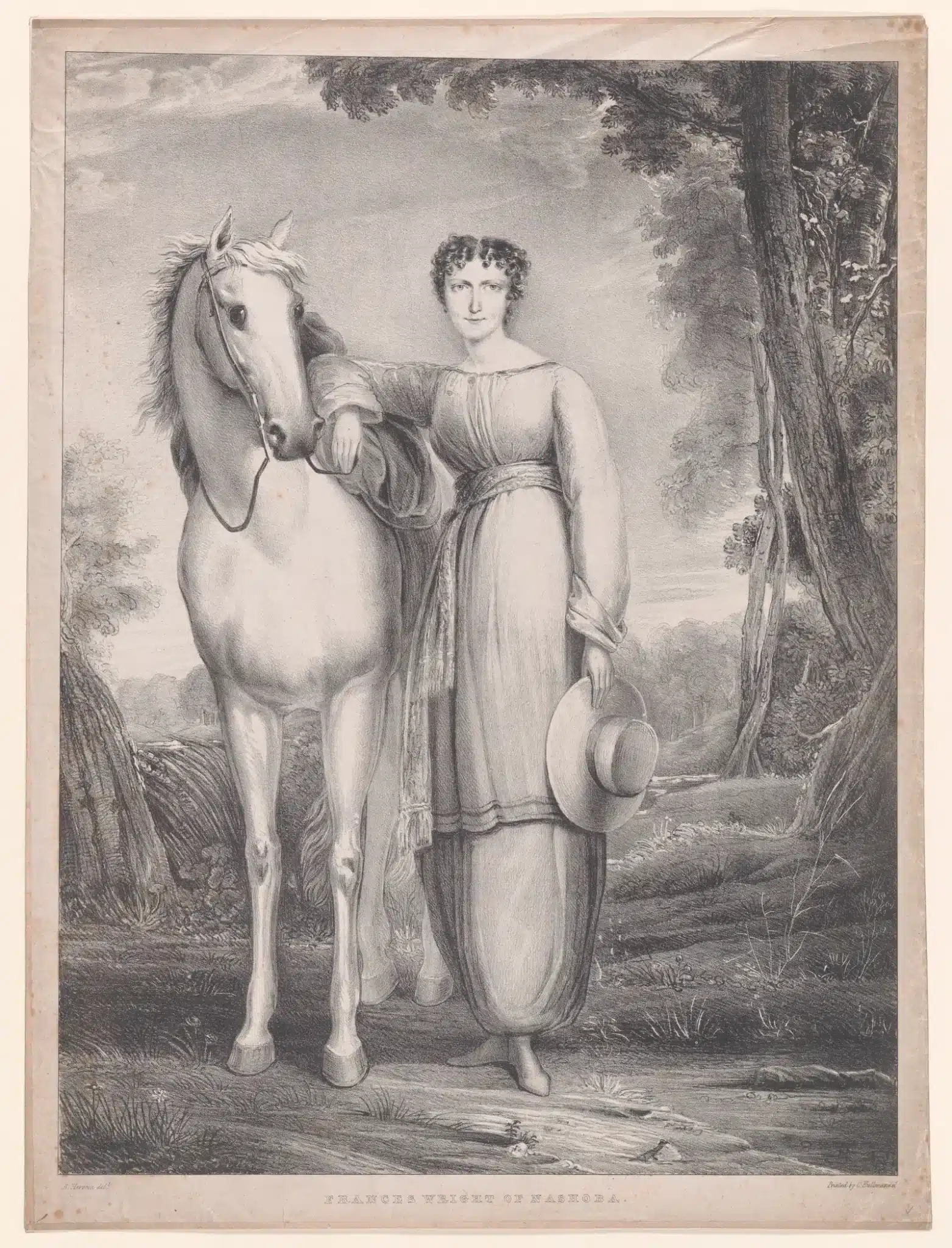
Frances Wright (1795–1852) was a Scottish-born writer and reformer who defended women’s right to lecture in public and take part in political debate. In 1828 and 1829, she drew crowds to hear her challenge religious authority and demand equal education. Her opponents attacked her character, and one even set a fire at a New York lecture. Wright kept speaking, then helped turn a former church into a center for lectures, debates, and education.
Taking America’s Promises Seriously
Wright first visited the United States in 1818 with her sister Camilla. She traveled widely and published an enthusiastic book about American society after returning to Britain. Here was a country founded on liberty and equality. She wanted to see those principles put into practice.
She returned in 1824 and became an American citizen the following year.
But her own attempt at reform exposed a terrible gap between principles and practice.
At Nashoba, an experimental community near Memphis, Tennessee, Wright bought enslaved people with a plan to have them work toward freedom. Their labor was supposed to repay the cost of their purchase and support their eventual settlement outside the United States. She hoped to show slaveholders a way to end slavery without losing money.
The people whose freedom was at stake remained enslaved. While Wright was in Europe in 1827, her sister and other trustees ran Nashoba, where enslaved residents were flogged. Wright failed to protect the enslaved women from hunger and sexual abuse. Wright eventually abandoned the scheme and accompanied the remaining enslaved residents to Haiti in 1830, where they could live as free people. By June she was back in New York, giving more lectures.
Meanwhile, she had begun taking her arguments to a wider public. On July 4, 1828, Wright gave the Independence Day address in New Harmony, Indiana, where the British industrialist Robert Owen had attempted to establish a cooperative community.
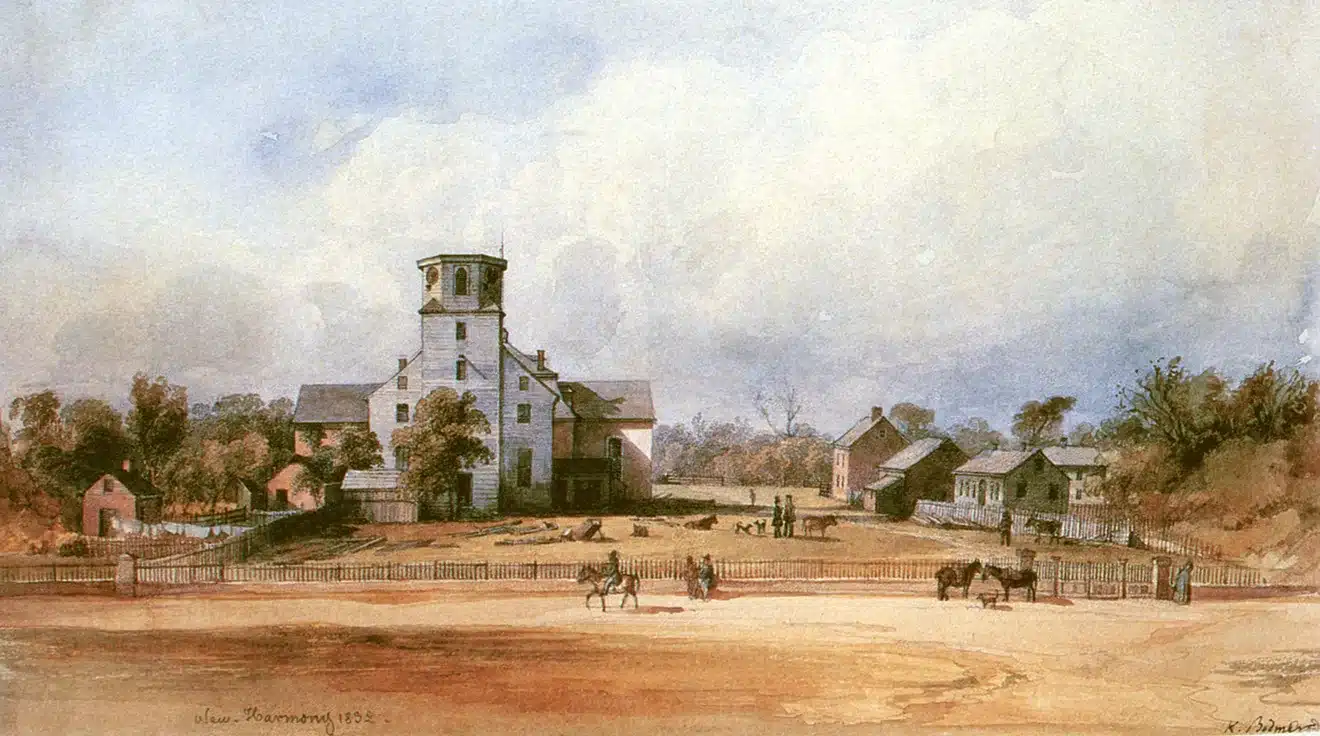
Wright argued that celebrating independence wasn’t enough. Americans needed to learn about their government, identify unjust laws, and change them. She praised their right to change their government peacefully, but condemned slavery and the treatment of Black Americans as a serious failure.
Asking Whether Truth Had a Sex
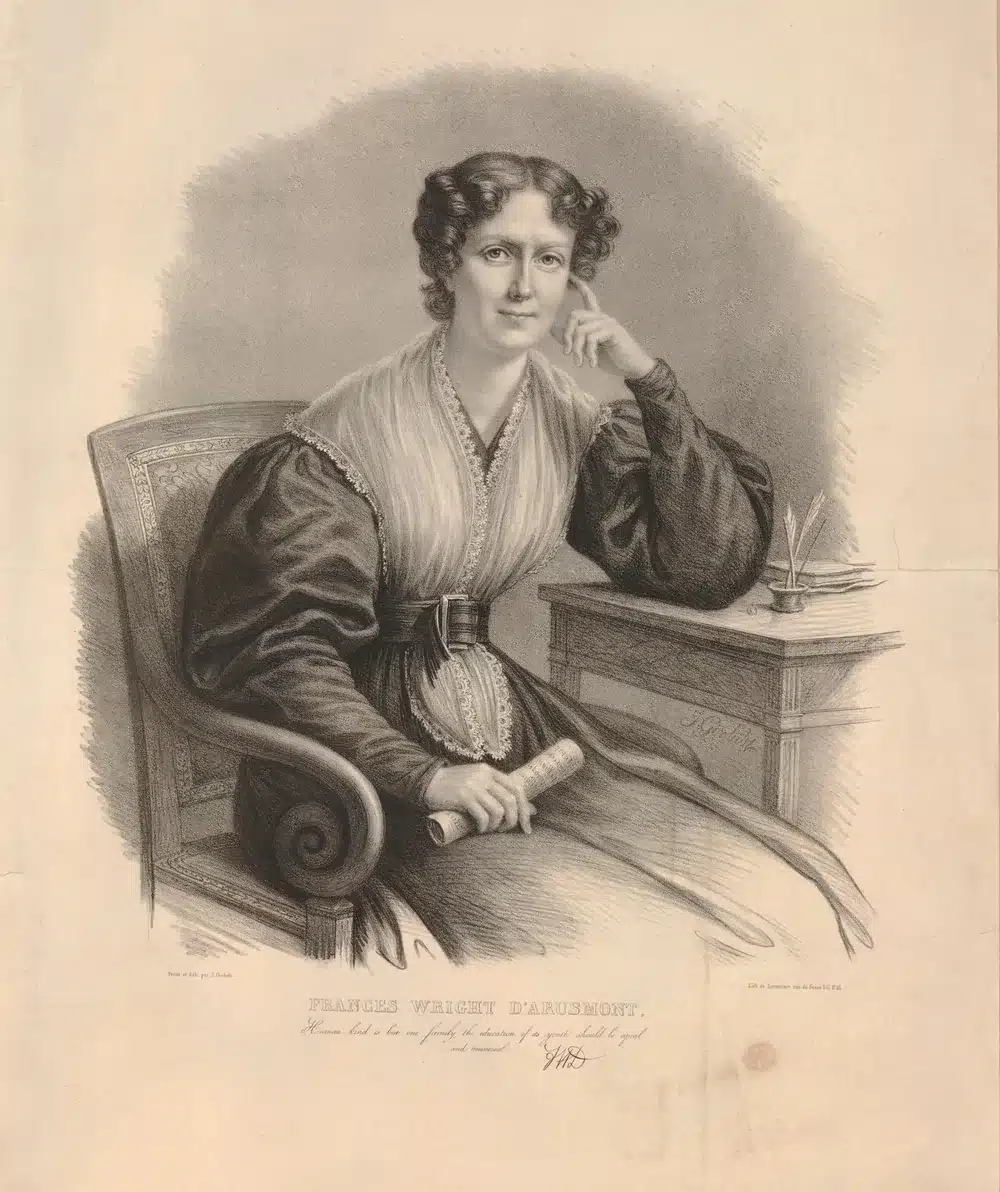
In Cincinnati that summer, Wright began a course of public lectures about knowledge and how to acquire it. Religious revivals were drawing crowds, but she attacked the fear and submission she believed religious teachers encouraged. She wanted people to investigate claims, examine evidence, and decide for themselves.
She first spoke in a courthouse, then repeated her lectures for a larger audience in a theater. In the published opening lecture, she acknowledged that some listeners might consider it improper for a woman to reason with them. Her answer was to ask “whether truth had any sex.”
She wasn’t just defending her own place on the platform. Women belonged in the audience, with the same right to question and learn as men.
In her lecture on free inquiry, Wright took aim at fathers who pursued knowledge themselves while withholding it from their wives and daughters. She mocked the idea that sons needed an education for public life while daughters needed only music, dancing, and fine clothes to prepare them for marriage.
Those limits helped preserve the very inequality used to justify them. A daughter was a human being, she argued, just as a son was. Parents should develop their children’s minds rather than train them to obey without thinking.
Her argument reached beyond the household. How could a republic promise equal rights while the rich controlled access to knowledge, poor children received an inferior education, and women were kept dependent?
Equality! where is it, if not in education? Equal rights! they cannot exist without equality of instruction.
Frances Wright, “Of Free Enquiry”
Wright reported seeing more women at successive meetings. Their attendance mattered to her because she wanted to reach the people with the fewest opportunities to learn. She was asking women to take part in a public conversation that many people thought they had no business entering.
Trying to Silence the Lecturer
On January 3, 1829, Wright began a New York lecture series at Masonic Hall before more than 1,500 people. Her ideas about religion and women’s equality made her a target for newspaper attacks as well as an attraction.
William Leete Stone, editor of the Commercial Advertiser, praised her first lecture in his January 5 report. The following day, his report on her second lecture criticized her for standing in full view of the audience instead of remaining behind a reading desk. In later attacks, he denounced her as “a bold blasphemer, and a voluptuous preacher of licentiousness.” It was an accusation of both religious and sexual wrongdoing, aimed at discrediting the woman along with her arguments.
At one New York lecture, an opponent burned a barrel of turpentine at the entrance to the hall. Smoke rose into the room above, and frightened listeners rushed to escape.
The attack didn’t end Wright’s lecture campaign.
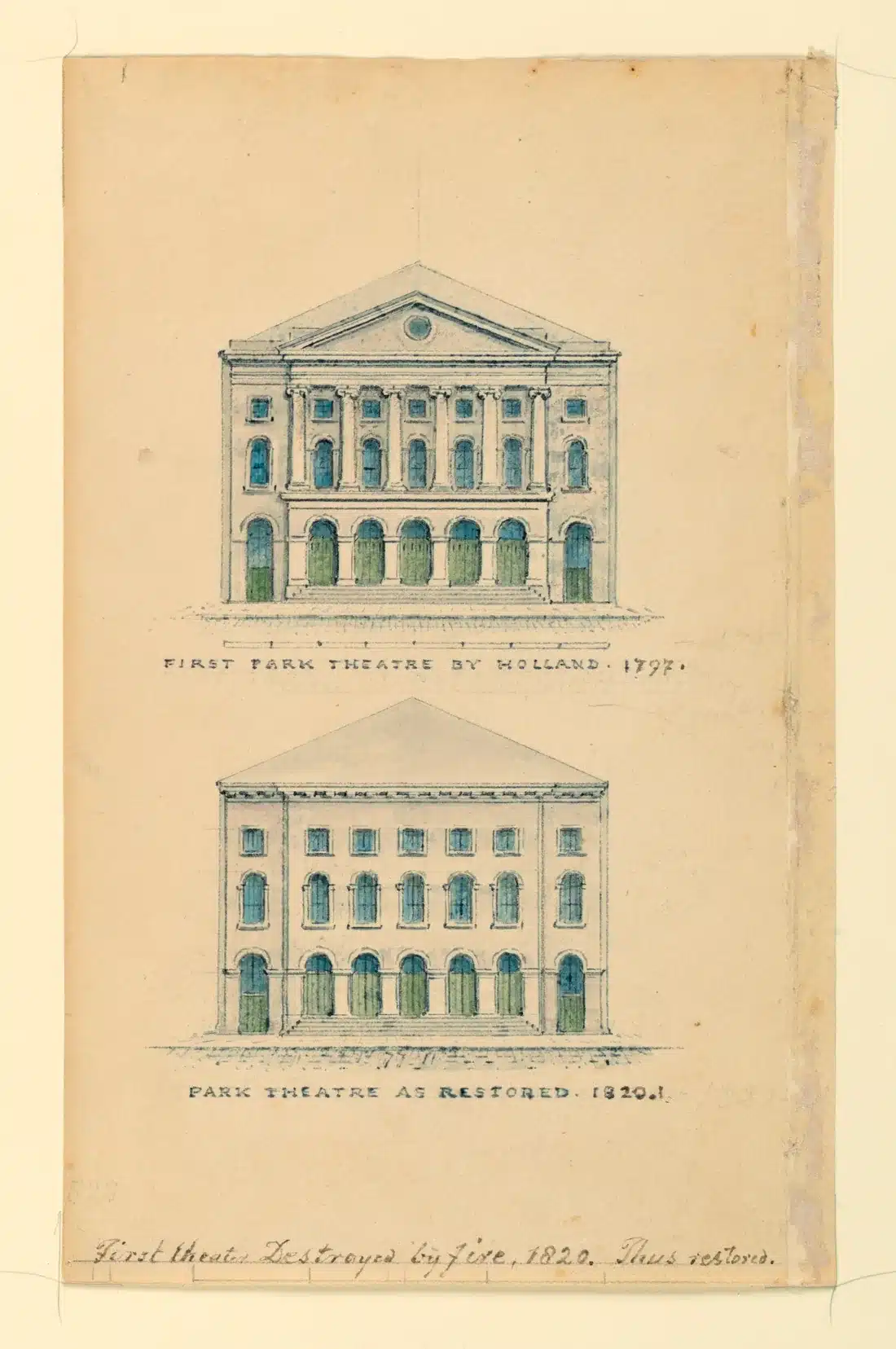
She went on to lease New York’s Park Theatre for six nights in late January and early February 1829.
With Robert Dale Owen, the industrialist’s son and a fellow reformer, she edited the Free Enquirer. The newspaper gave their arguments somewhere to circulate beyond the lecture room, challenging religious authority and discussing social reform.
Turning a Church Into a Hall of Science
In April 1829, Wright bought a former Baptist church on Broome Street in New York. She and Owen made it the Hall of Science, with lectures and discussions offering an alternative to religious instruction. She delivered its opening address on April 26.
The building gave free inquiry a practical home. It housed a bookstore and circulating library, and offered schooling for working people’s children. Adults could come to hear ideas discussed instead of relying only on a church or on books they could afford to buy.
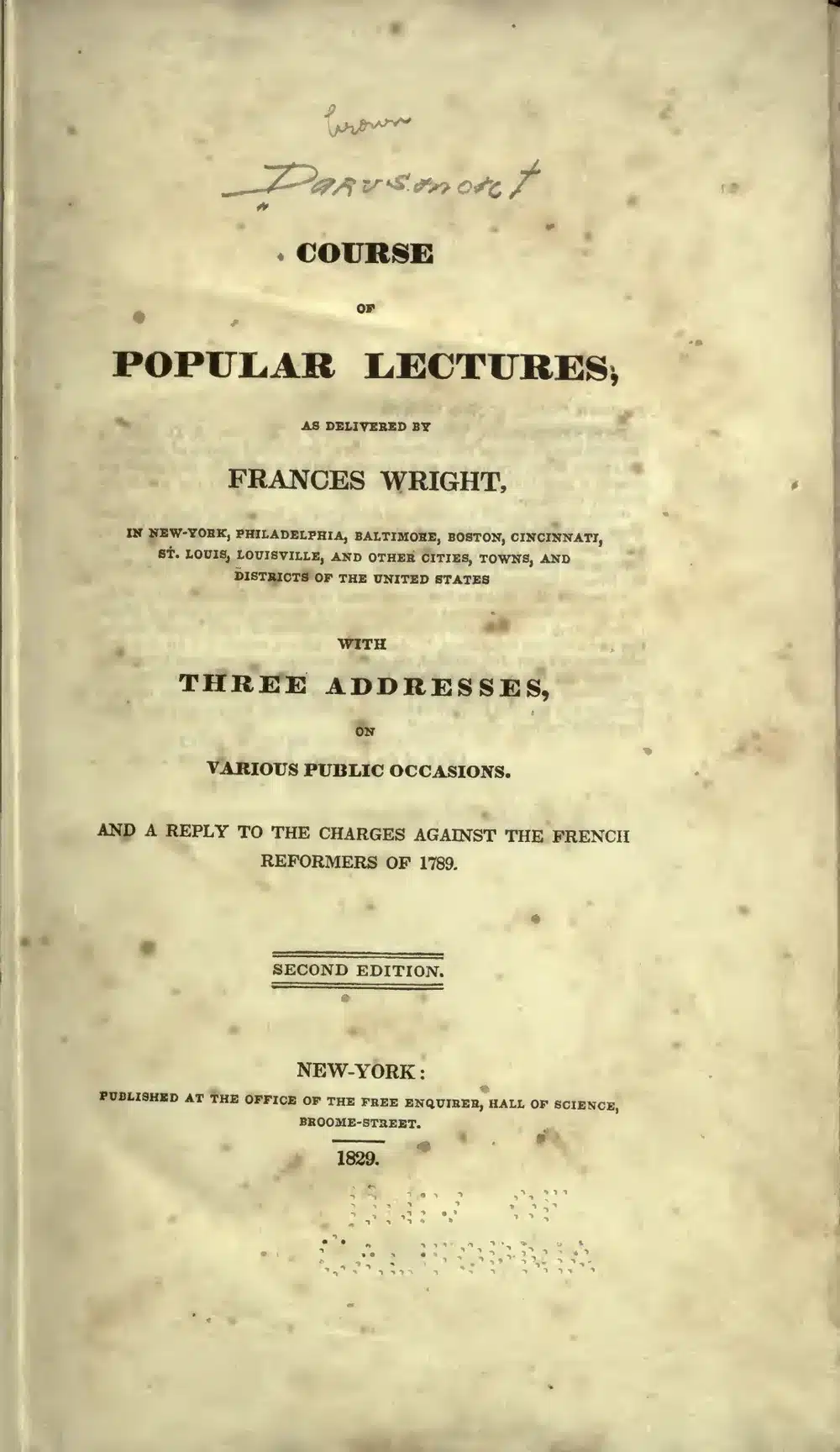
That year Wright also published her Course of Popular Lectures. Readers beyond her audiences could examine her case that liberty depended on people having the means and confidence to think for themselves.
By 1831, upkeep cost more than renting a meeting room elsewhere, and Wright and Owen sold the building to a Methodist congregation.
Wright later returned to lecturing in the 1830s. She died in Cincinnati on December 13, 1852.
But in those crowded lecture rooms, Wright had done something her critics insisted a woman shouldn’t do: reason publicly with women and men as her equals. In her own words, free inquiry could not work unless it embraced “the two sexes on a footing of equality.”
Sources and Further Reading
- Frances Wright, Course of Popular Lectures: “On the Nature of Knowledge” and “Of Free Enquiry” (primary-source transcriptions).
- Frances Wright, Independence Day address at New Harmony, July 4, 1828. Voices of Democracy, University of Maryland.
- Gay Gibson Cima, Performing Anti-Slavery: Activist Women on Antebellum Stages (2014), pp. 48–52.
- “Frances Wright,” Thomas Jefferson Encyclopedia, Monticello.
- Carolyn Eastman, A Nation of Speechifiers, pp. 187, 195–197, 200–201; notes, pp. 274–278 (online transcription).
- Edwin G. Burrows and Mike Wallace, Gotham, “The Press of Democracy” (online transcription).
- Eric R. Schlereth, An Age of Infidels (2013), pp. 209–210 (online transcription).
- Library of Congress, Frances Wright Papers: A Finding Aid (2025), pp. 2–3.
- Frances Wright, “Address to Young Mechanics,” New York, June 13, 1830 (primary-source transcription).
- Skyler Gordon, “The Enslaved of Nashoba,” Tennessee Historical Society (2017).


Beyond the article
Join the Conversation
Share your perspective, ask a question, or add something to the story.