
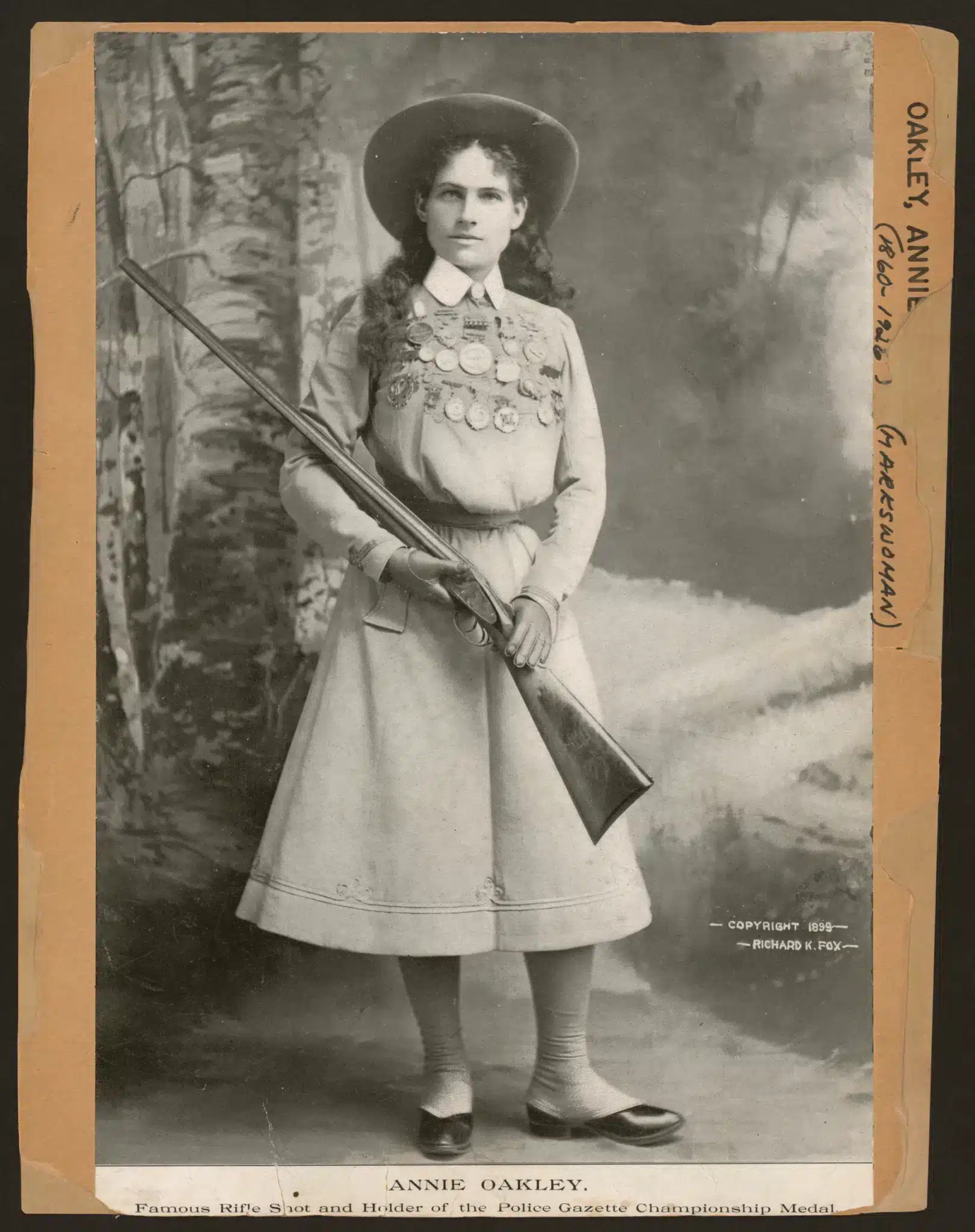
In popular culture, the American Wild West is often remembered as a world dominated by cowboys, outlaws, and male lawmen. Yet, women were right alongside men, riding horses, roping cattle, protecting land, and surviving under extremely harsh conditions. Facing brutal weather, vast isolation, and rigid Victorian expectations of how a woman “should” behave, these frontier women shattered traditional gender roles out of sheer necessity and carved out a brand-new identity in American history.
Frontier Life: Breaking the Victorian Mold
During the mid-to-late 19th century, mainstream society was governed by the Doctrine of Separate Spheres, which insisted a woman’s place belonged strictly in the domestic sphere of the home.
The harsh reality of the Western frontier, however, quickly tore those Victorian expectations apart. On remote homesteads and ranches, survival required all hands on deck; women had to ride astride, mend fences, shoot weapons to defend livestock, and endure exhausting manual labor.
Terminology: From Ranch Women to “Cowgirls”
While the word “cowboy” was widely used throughout the 19th century, the term “cowgirl” was virtually non-existent in everyday speech until the late 1880s and 1890s.
Women who worked with livestock during the mid-1800s were typically referred to as “ranch women,” “female herders,” or simply country homesteaders. The term “cowgirl” began gaining traction through early Western press coverage and was fully popularized by Wild West shows and early 20th-century rodeos, transforming into a proud title for women possessing elite equestrian and roping skill.
What Did Frontier Women Actually Do?
Frontier women were far more than passive homesteaders.
They actively shaped the economic and physical landscape of the West:
- Ranching and Herding: Women branded cattle, managed livestock, cleared land, and drove herds over dangerous trails, often managing entire operations alone when family members were away or deceased.
- Wild West Exhibitions & Rodeos: As the frontier era waned, many skilled working women translated their practical ranching abilities into lucrative entertainment careers, thrilling massive global audiences with trick riding, roping, and bronc riding.
- Business & Community Building: Beyond the trail, women established boarding houses, shops, and newspapers, playing an essential role in settling early frontier towns. In her memoir, Mountain Charley described running saloons and hauling supplies to mining camps. (For a deeper look into early Western business pioneers, explore Women of the California Gold Rush.)
4 Historic Women of the Wild West
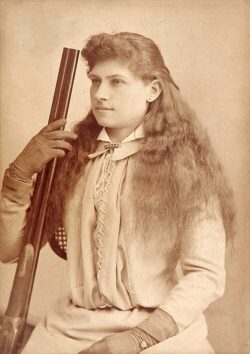
Annie Oakley (1860–1926)
Born Phoebe Ann Moses, Annie Oakley was a renowned exhibition shooter who became the breakout star of Buffalo Bill’s Wild West show. Demonstrating astonishing marksmanship—such as shooting a cigar out of a person’s hand or splitting a playing card edge-on from 30 paces—Oakley redefined what audiences thought women were capable of achieving in sport and entertainment.
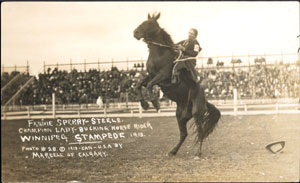
Fannie Sperry Steele (1887–1983)
Fannie Sperry Steele was a world-champion bronc rider who proved that women could tame wild horses just as expertly as men. Performing on bucking horses without riding side-saddle, she became one of the first inductees into the National Cowgirl Hall of Fame. Learn more about legendary rodeo performer Fannie Sperry Steele.
Buffalo Calf Road (c. 1850s–1879)
Buffalo Calf Road was a heroic Cheyenne warrior woman who fought fearlessly to defend her people and territory during the Northern Plains Indian Wars. She is famous for saving her brother’s life at the Battle of the Rosebud in 1876, charging into the line of fire on horseback to rescue him. Read the full story of Buffalo Calf Road.
Mary Fields aka “Stagecoach Mary” (c. 1832–1914)
Mary Fields was the first African American female star-route mail carrier in the United States. Standing over six feet tall and traveling carrying a rifle and a revolver, Fields drove her stagecoach through treacherous snow and rugged terrain, earning a legendary reputation for her unwavering toughness, independence, and reliability.

Legacy & Impact
The women of the Wild West broke free from restrictive 19th-century gender roles out of necessity and ambition, proving that physical strength, grit, and self-reliance were not exclusive to men. Their visible independence fundamentally reshaped public perception and helped propel Western territories to become early leaders in granting women the right to vote.
Sources & References
- National Cowgirl Museum and Hall of Fame: Hall of Fame Inductees & Archives
- National Women’s History Museum: Women’s History Digital Exhibits
- National Park Service: Women’s History in the National Parks
- Smithsonian National Postal Museum: Mary Fields / “Stagecoach Mary” Biography

Keri is a blogger and digital marketing professional who founded Amazing Women In History in 2011.
Beyond the article
Join the Conversation
Share your perspective, ask a question, or add something to the story.