
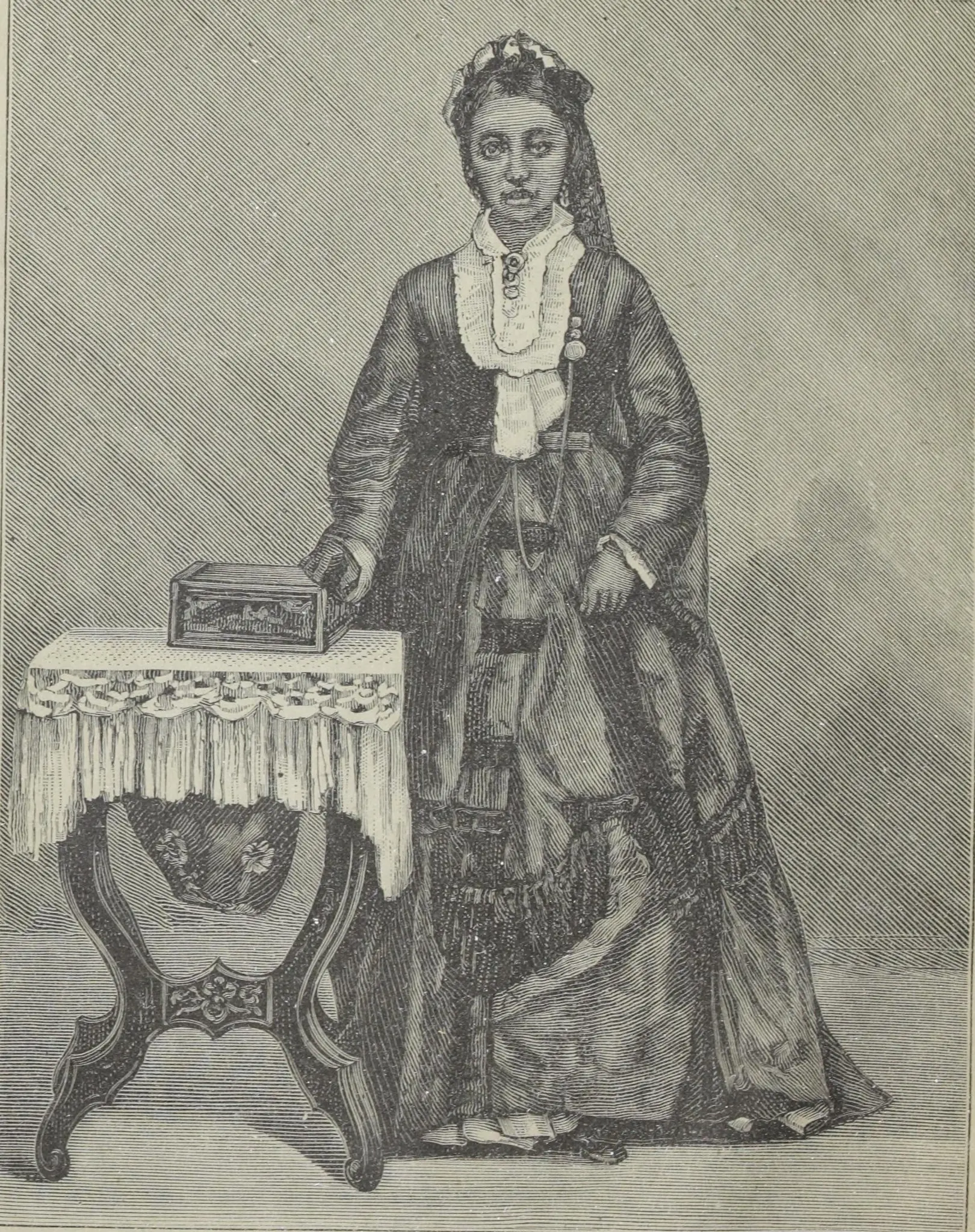
Ranavalona III became Madagascar’s last queen at 21, during a French invasion. Her government negotiated peace and sought foreign support, trying to preserve the kingdom’s independence. The struggle ended with French guns firing on her palace, followed by the loss of her throne and a permanent exile.
A Queen Crowned During an Invasion
Madagascar is the large island off Africa’s southeastern coast. Its people are known as Malagasy. Ranavalona’s Merina dynasty ruled from Antananarivo in the central highlands, though its authority was still contested in parts of the island.
By the late nineteenth century, French merchants and missionaries had been active in Madagascar for decades. France wanted greater control over the island and demanded property rights for French citizens. In 1883, French forces bombarded and occupied coastal ports. The previous queen, Ranavalona II, died that July. Her young relative, Princess Razafindrahety, took the throne as Ranavalona III.
The new queen inherited a powerful prime minister, Rainilaiarivony. He’d directed the government since 1864 and had married the two previous queens in succession. Now he married Ranavalona. At 55, he was more than thirty years older than his new wife.
This was a political arrangement that had developed in the 1860s. Rainilaiarivony came from a powerful family outside the royal line. Marriage linked his family to the monarchy and helped him remain in power as queens succeeded one another. He continued to direct the government and command the army.
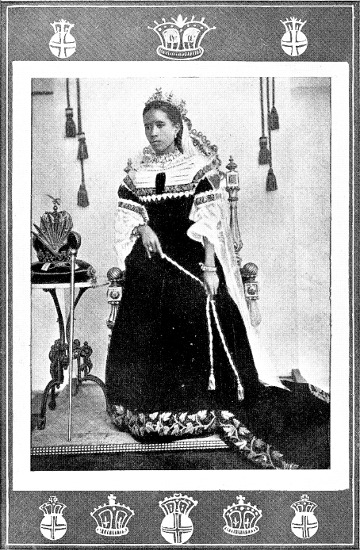
The new queen’s coronation took place on November 22, 1883, her 22nd birthday. She wore an ivory satin gown with gold embroidery and a crimson velvet train. An eyewitness whose letter was published the following year noticed how carefully she controlled her expression. Her hands, however, “trembled like an aspen leaf.”
Later, she rose to address the crowds gathered on the plain of Imahamasina.
Missionary J. Richardson, who attended, described her delivering a speech she’d learned by heart. When she reached her promise to defend the country against French claims, she raised her golden sceptre. People answered with shouts and waved their shields, spears, and rifles.
I will show myself to be a man.
Ranavalona III, in J. Richardson’s English rendering
She promised to join them in defending their fatherland.
Peace Came with a Price
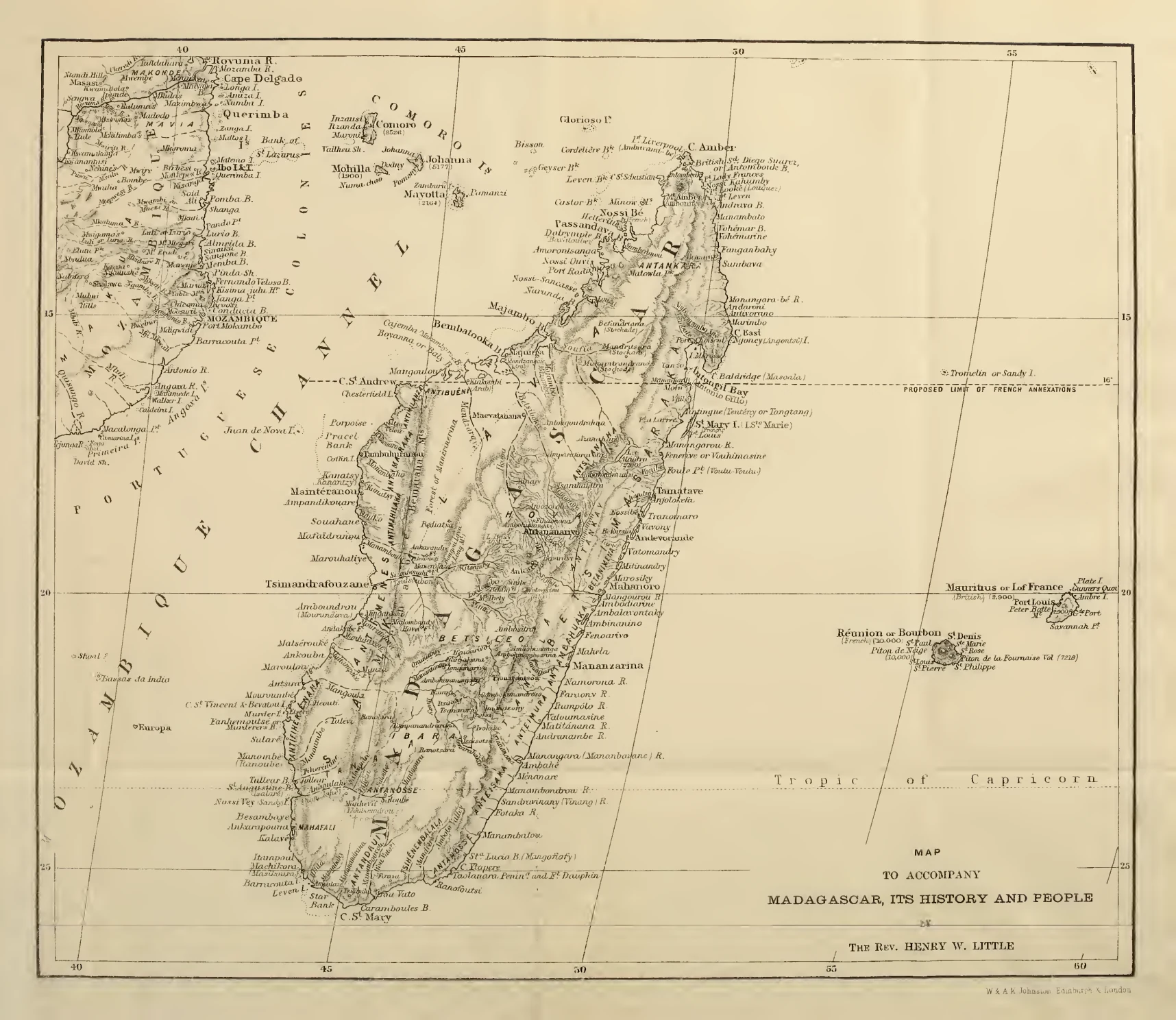
The French held coastal positions, but they hadn’t captured the highland capital. The fighting continued until December 1885, when representatives of France and Ranavalona’s government agreed to peace.
The terms were expensive. Her government had to pay ten million francs to settle French claims and compensate foreigners for wartime losses. French troops would remain at Tamatave, a major east-coast port, until the money was paid. France also gained the right to occupy Diego Suarez Bay in the north.
The treaty said France would represent Madagascar in foreign relations. It also said the French representative must not interfere with the country’s internal administration, which remained under the queen.
France treated the agreement as establishing a protectorate: Madagascar would keep its own ruler, but come under French authority. The Malagasy government disputed how far that authority extended.
Ranavalona still had her throne and her government. The argument over who could exercise which powers continued after the shooting stopped.
Silk Gifts and the Search for Allies
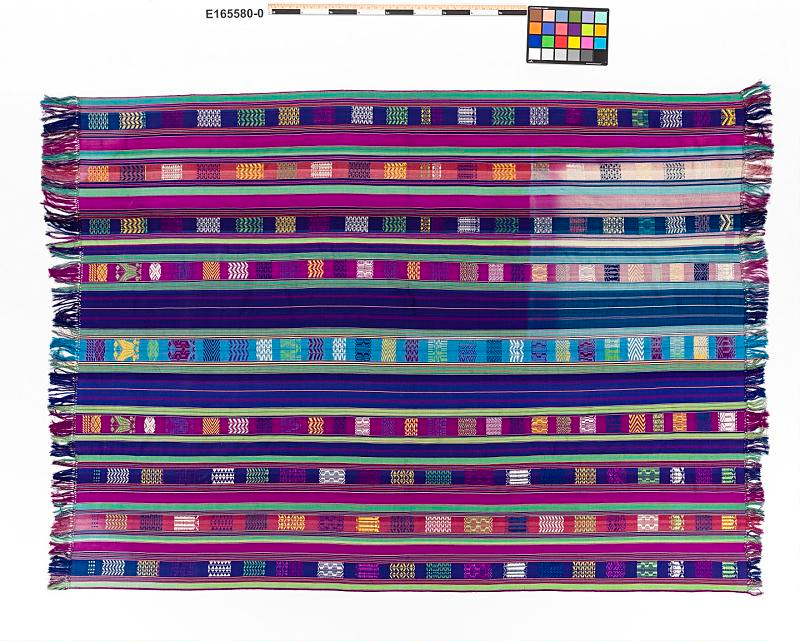
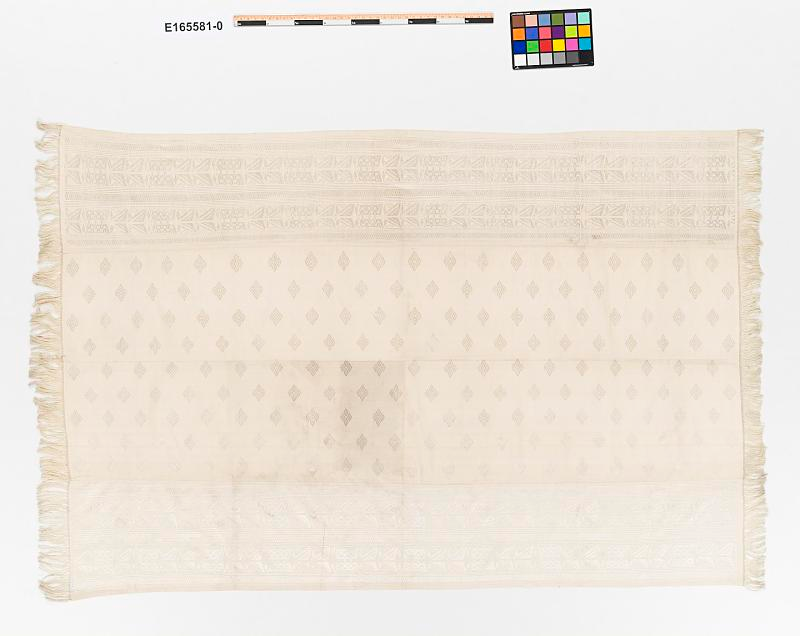
Ranavalona’s government maintained relationships with countries beyond France. American merchants already traded with Madagascar, and in 1886 she sent President Grover Cleveland two elaborate silk cloths.
These were lamba akotofahana, luxury textiles associated with royalty and wealth. Cloth was a gift through which Malagasy people expressed status and built relationships.
The two cloths are now in the Smithsonian’s collections.
Despite her government’s diplomatic efforts, Britain and France reached their own agreement about Madagascar in August 1890. Britain recognized France’s claimed protectorate over the island, while France recognized Britain’s protectorate over Zanzibar, off Africa’s east coast. The agreement protected British interests and missionaries in Madagascar.
Friendship and trade with the United States didn’t bring military protection either. When France returned to war, no foreign government intervened to preserve Ranavalona’s independence.
French Guns Reached the Palace
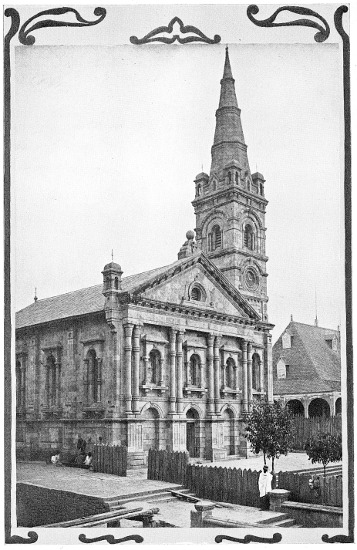
In 1894, France demanded an agreement that would make its authority more explicit and give it greater control. Ranavalona and Rainilaiarivony refused. Negotiations broke down that October, and France prepared another expedition.
French troops landed at Mahajanga on the northwest coast in 1895 and advanced toward Antananarivo. Disease and the difficulty of moving troops and supplies slowed them, but the Malagasy army failed to stop their approach. Contemporary accounts describe serious failures of leadership and organization.
On September 30, French troops fought their way onto the hills beside the capital. They silenced Malagasy guns, forced the defenders back, and brought their own artillery into position to bombard the city and royal palace.
The palace courtyard was crowded with soldiers and others seeking shelter. A shell burst among them, killing people within the royal compound.
Missionary Thomas Matthews later wrote that Ranavalona was on the palace veranda with Rainilaiarivony when the shell struck. He described her almost fainting at the sight and immediately ordering the royal flag lowered.
The flag came down. Malagasy officers carried a white flag out to the French lines, and the capital surrendered.
On October 1, Ranavalona accepted a new treaty. This time it explicitly required her government to recognize France’s protectorate “with all its consequences.” The French representative would control foreign relations and internal administration. France could keep troops on the island, and her government couldn’t take out a loan without French permission.
She was still queen, but the decisions that made her country independent had been taken out of her hands.
France Took Her Kingdom, Then Sent Her Away
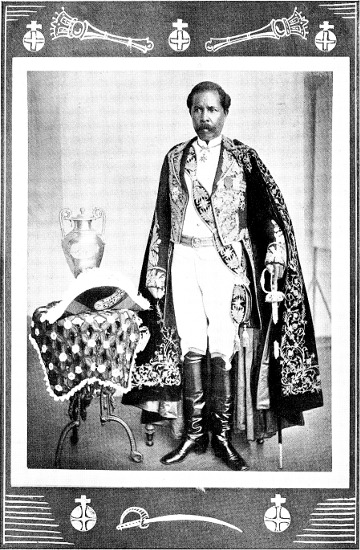
The French removed Rainilaiarivony from office and sent him to Algiers, where he died in 1896. They initially kept Ranavalona on the throne.
Resistance to French rule continued. The Menalamba, or “Red Shawls,” rebellion also expressed anger against the existing royal government and its Christian institutions. Many rebels wanted to expel the French and restore their ancestors’ religious practices. Opposition to conquest didn’t mean that everyone supported the court.
On August 6, 1896, France formally annexed Madagascar. The following February, General Joseph Gallieni abolished the monarchy and ordered Ranavalona into exile. French authorities feared she could become a focus for resistance.
She was taken from Antananarivo during the night and sent to Réunion. Her sister Rasendranoro, her niece Razafinandriamanitra, and her aunt Ramasindrazana joined her in exile. Two years later, the French moved Ranavalona to Algiers.
France eventually allowed her visits to Paris. It never allowed her to return to Madagascar. She died in Algiers in 1917, aged 55, without seeing her country again.
Madagascar regained its independence from France on June 26, 1960.
Sources and Further Reading
- Henry W. Little, Madagascar: Its History and People (1884), pp. 260–266.
- J. Richardson, “The Coronation of Ranavalona III,” The Antananarivo Annual, pp. 283 onward.
- Treaty between France and Madagascar, December 17, 1885, in Foreign Relations of the United States.
- Martin E. Schmidt, “Prelude to Intervention: Madagascar and the Failure of Anglo-French Diplomacy, 1890–1895” (1972).
- Smithsonian, 2001 Collection Statistics, p. 76, on the queen’s silk gifts.
- Thomas T. Matthews, Thirty Years in Madagascar (1904), especially pp. 291–300.
- Treaty between France and Madagascar, October 1, 1895, in Foreign Relations of the United States.
- Gwyn Campbell, “Crisis of Faith and Colonial Conquest: The Impact of Famine and Disease in Late Nineteenth-Century Madagascar” (1992).
- Amy-Jane Humphries, Ranavalona III, Team Queens.
- Phares M. Mutibwa, with Faranirina V. Esoavelomandroso, “Madagascar, 1800–1880,” UNESCO General History of Africa, vol. VI, pp. 480–481 (French edition).
- Zoë Crossland, “Affective Politics and the Qualities of Things” (2026), especially p. 27, on ancestral practices and resistance.
- Frédéric Garan, “L’exil de Ranavalona III, dernière reine de Madagascar” (2021), especially paragraph 8.
- The Anglo-French Agreement, House of Lords, August 11, 1890, Hansard.
- President Philibert Tsiranana’s cable of June 26, 1960, United Nations Security Council document S/4352/Rev.1.

Keri is a blogger and digital marketing professional who founded Amazing Women In History in 2011.

Beyond the article
Join the Conversation
Share your perspective, ask a question, or add something to the story.