
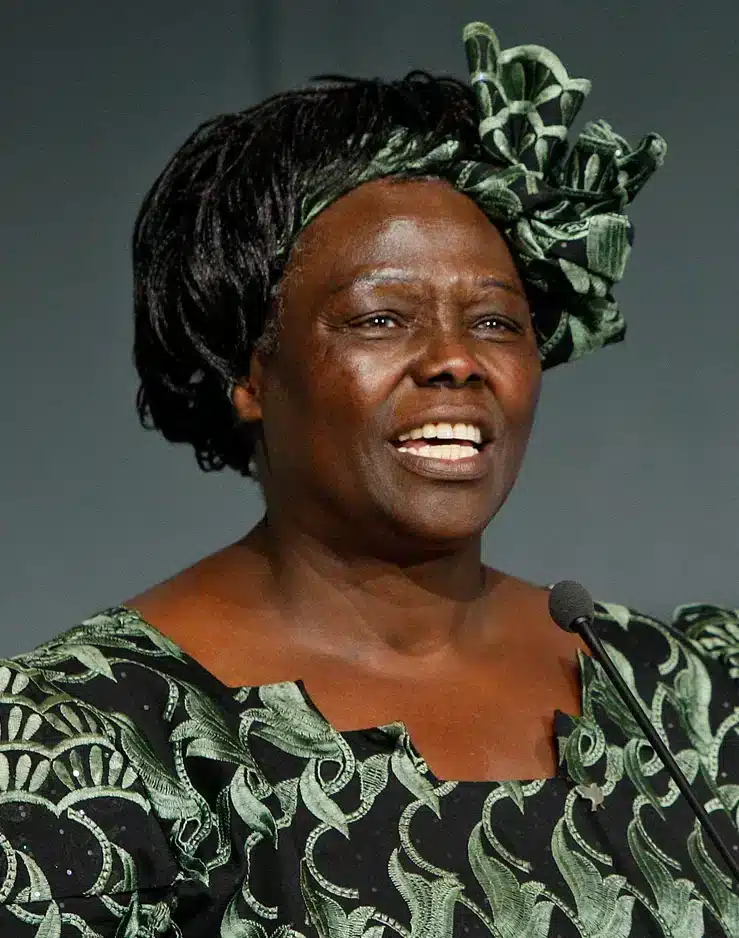
For centuries, women have stood at the forefront of protecting the natural world, uncovering fundamental scientific truths, and leading movements to preserve ecosystems across the globe. Yet, throughout history, women in science and environmental advocacy faced formidable systemic barriers. Excluded from male-dominated scientific institutions, denied formal recognition, and often dismissed by commercial interests, these trailblazers nevertheless persevered to transform our understanding of the planet.
From groundbreaking climate science discoveries to fearless grassroots protests, these nine remarkable women defined the modern environmental movement entirely on their own terms.
1. Eunice Newton Foote (1819–1888)
Eunice Newton Foote was an American scientist and women’s rights advocate who became the first person to discover that atmospheric gases cause global warming. In 1856, she conducted groundbreaking experiments demonstrating that air enclosed in glass cylinders filled with carbon dioxide heated up significantly more than cylinders containing standard air, and took much longer to cool down.
Despite her monumental discovery, mid-19th-century gender prejudice prevented her from presenting her own scientific findings. The American Association for the Advancement of Science required a male scientist to read her paper on her behalf. For over a century, her foundational contribution to climate science was largely ignored by mainstream history, yet her early work accurately foreshadowed our modern understanding of global climate change.

2. Rachel Carson (1907–1964)

Rachel Carson was a marine biologist and author whose landmark 1962 book Silent Spring fundamentally transformed humanity’s relationship with the natural environment. Writing with both rigorous scientific accuracy and poetic clarity, she exposed the widespread destruction caused by synthetic chemical pesticides like DDT on wildlife and ecosystems.
Following the publication of her work, chemical companies launched ferocious smear campaigns to discredit her credentials, attacking her as hysterical and unqualified. Carson bravely endured these aggressive personal and industry attacks while battling advanced breast cancer. Her courage and unwavering determination sparked a global ecological awakening, leading directly to nationwide bans on DDT and the creation of the United States Environmental Protection Agency.
3. Marjory Stoneman Douglas (1890–1998)
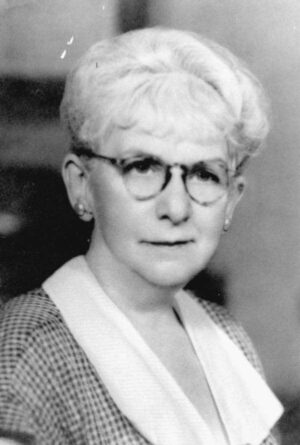
Marjory Stoneman Douglas was a journalist and conservationist who redefined how the world views fragile wetland ecosystems. In her influential 1947 book The Everglades: River of Grass, she challenged the prevailing public perception that the Florida Everglades were merely useless, disease-ridden swamps suitable only for draining and development.
For decades, developers, agricultural corporations, and politicians attempted to destroy the region for financial profit. Douglas spent over half a century fighting fiercely against these powerful commercial interests, organizing grassroots campaigns well into her nineties to protect Florida’s water systems and secure permanent conservation protections for the Everglades ecosystem.
4. Rosalie Edge (1877–1962)

Rosalie Edge was a suffragist and passionate wildlife advocate who revolutionized American conservation politics. Combining her organizational expertise from the women’s suffrage movement with her commitment to wildlife protection, she founded the Emergency Conservation Committee in 1929.
At a time when mainstream, male-led conservation groups focused almost exclusively on preserving game animals for sport hunting, Edge aggressively held these organizations accountable for ignoring non-game species. In 1934, she established the Hawk Mountain Sanctuary in Pennsylvania, the world’s first refuge dedicated to protecting birds of prey, creating a lasting sanctuary for raptors facing mass extermination by hunters.
5. Ynes Mexia (1870–1938)

Ynes Mexia was a Mexican-American botanist and conservation pioneer who made extraordinary contributions to botanical science. Defying societal expectations of her era, she began her professional scientific career in her mid-fifties, navigating treacherous terrain, harsh wilderness conditions, and rampant racial and gender discrimination.
Over thirteen years of solo expeditions across North and South America, Mexia collected over 150,000 plant specimens, discovering over 500 new plant species, several of which were named in her honor. In addition to her massive research output, she actively advocated for forest conservation, fighting against destructive commercial logging operations in Northern California’s redwood forests.
6. Gaura Devi (1925–1991)

Gaura Devi was an indigenous grassroots leader from Uttarakhand, India, who pioneered nonviolent environmental defense. In March 1974, when commercial logging contractors arrived with government authorization to clear-cut vital old-growth forests near her village, she mobilized 27 local women to confront the armed loggers.
Refusing to back down in the face of threats and intimidation, Devi and the village women physically hugged the trees, placing their bodies directly between the axes and the forest. This heroic act ignited the world-famous Chipko movement, establishing direct action as a powerful force for forest conservation and inspiring environmental protection efforts globally.
7. Celia Hunter (1919–2001)
Celia Hunter was a World War II WASP (Women Airforce Service Pilots) aviator and formidable wilderness advocate. After flying military aircraft during the war, she used her aviation skills to explore and protect vast tracts of Alaskan wilderness.
Facing opposition from industrial interests and government agencies eager to exploit Alaska‘s natural resources, Hunter co-founded the Alaska Conservation Society in 1960. Her persistent activism and organizing proved crucial in preserving millions of acres of pristine subarctic ecosystems, ultimately securing permanent protection for lands that became Denali National Park and Arctic wildlife reserves.

8. Mardy Murie (1902–2003)

Known as the “Grandmother of the Conservation Movement,” Mardy Murie dedicated her entire century-long life to defending North America’s wildest places. Through extensive expeditions, public lecturing, and relentless legislative advocacy, she brought national attention to the ecological significance of undisturbed wilderness.
Murie faced continuous resistance from commercial lobbies seeking mineral and oil extraction on public lands. Undeterred, her passionate testimony before the United States Congress was instrumental in establishing the Arctic National Wildlife Refuge and securing the passage of the landmark Wilderness Act of 1964, which legally protected millions of acres of wild land for future generations.
9. Wangari Maathai (1940–2011)

Wangari Maathai was a Kenyan environmental and political activist who recognized the deep link between environmental degradation and social inequality. In 1977, she founded the Green Belt Movement, an organization that mobilized rural women to plant millions of trees across Kenya to battle severe soil erosion, deforestation, and water scarcity.
Her grassroots environmental organizing posed a direct threat to an authoritarian government. Maathai was repeatedly beaten, jailed, and vilified by state authorities for opposing illegal government land-grabbing. Demonstrating unshakeable resilience, she expanded her movement across Africa, planting over 50 million trees and becoming the first African woman to receive the Nobel Peace Prize in 2004.
Legacy & Impact
The contributions of these nine women established the foundation for modern environmental protection, climate science, and ecological conservation. In the face of intense public ridicule, commercial retaliation, and entrenched institutional sexism, they proved that individual determination and rigorous science can reshape government policy and public consciousness. Today, their pioneering spirit lives on in global climate activism, wildlife protection initiatives, and ongoing struggles to safeguard our planet’s natural habitats for generations to come.
Sources & References
- Carson, Rachel. Silent Spring. Houghton Mifflin, 1962.
- Douglas, Marjory Stoneman. The Everglades: River of Grass. Rinehart & Company, 1947.
- Foote, Eunice. “Circumstances Affecting the Heat of the Sun’s Rays.” The American Journal of Science and Arts, Vol. 22, 1856.
- Maathai, Wangari. Unbowed: A Memoir. Knopf, 2006.
- Murie, Margaret E. Two in the Far North. Knopf, 1962.

Keri is a blogger and digital marketing professional who founded Amazing Women In History in 2011.

Beyond the article
Join the Conversation
Share your perspective, ask a question, or add something to the story.