
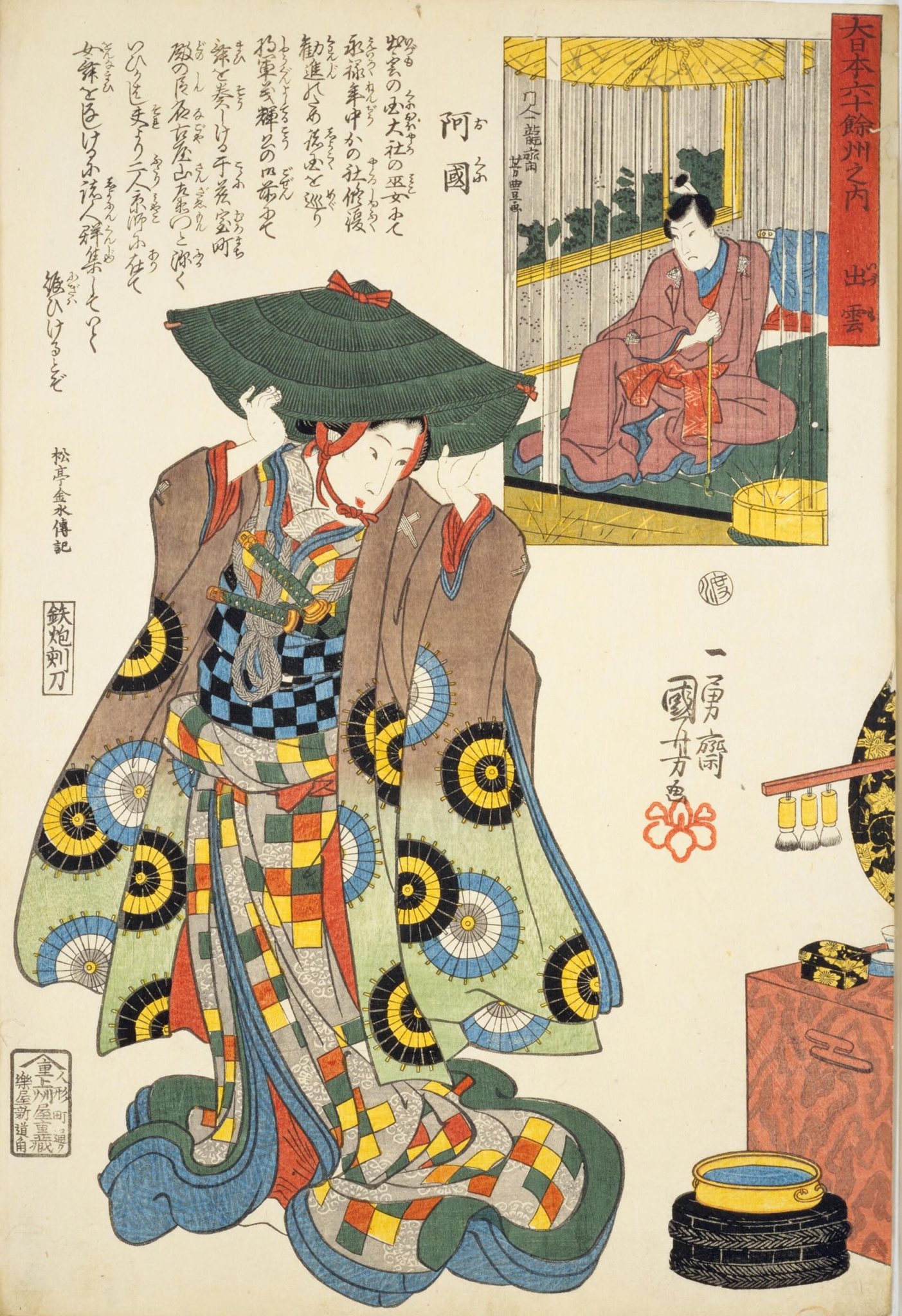
Izumo no Okuni was a Japanese dancer and theatre innovator who founded kabuki, one of Japan’s great performing arts. Her early kabuki combined short comic scenes with singing and dancing, drawing on the fashions and characters of her own time. In Kyoto around 1603, she dressed as a flamboyant young man and turned a visit to a teahouse into a wildly popular entertainment. Other women copied her performances, spreading the new style. The theatrical tradition that later became famous for men playing women’s roles began with a woman making a sensation in men’s clothes.
Okuni Takes the Swaggering Man’s Part
Kyoto University reuse terms.
Okuni performed at a time when new kinds of popular entertainment were flourishing in Japan. Years of civil war were coming to an end, and group dances with elaborate costumes had become fashionable. She drew on the music, dancing, and clothes of her own time to create something audiences couldn’t get enough of.
She introduced herself as a shrine maiden from the Grand Shrine of Izumo, in what’s now Shimane Prefecture. But the character she became known for onstage was a very different figure: a flashy young man with a large sword, off to enjoy himself at a teahouse.
Okuni modeled her stage character on the kabukimono, men known for showy clothes and unruly behavior. Their name came from kabuku, meaning to lean or deviate, with the sense of stepping outside ordinary conventions. Her performances became known as kabuki-odori, dancing in that unconventional style. That’s where the name kabuki comes from, for the theatrical tradition that grew from her shows.
The teahouses she portrayed were places where men commonly paid for sex. Some of the women there were sold into service and forced to work off the money paid to their families. Onstage, though, Okuni turned that balance of power around. She took the male customer’s part, using song and dance to make fun of his flashy clothes and swaggering behavior.
Her performances attracted common people, samurai warriors, and members of the nobility.
Okuni’s Success Reaches Beyond Kyoto
Okuni’s performances made her famous and gave other women a new style of entertainment to copy. In Kyoto, she became successful enough to have a stage built for herself at Kitano Shrine. Entertainers often used temporary stages beside rivers or on temple and shrine grounds, taking them down when a performance was over.
Her success reached well beyond the city’s popular entertainments. In 1607, she performed at Edo Castle, the seat of Japan’s military rulers. Her career had taken her from Kyoto’s outdoor stages to the shogun’s castle.
The appeal of her shows is illustrated in a painted folding screen now held by Kyoto National Museum. It depicts a performance of Chaya asobi, or Amusement at the Teahouse, a popular piece associated with her troupe.
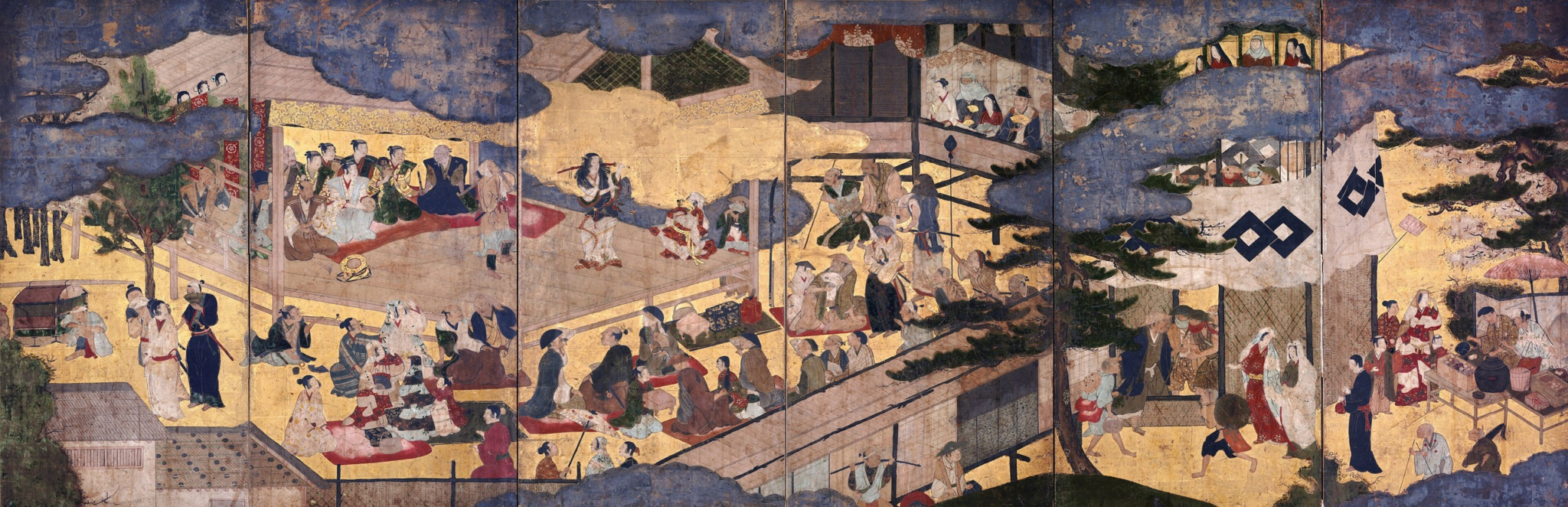
Onstage are a central character carrying a sword, a comic performer with a towel around the head, and a teahouse proprietor sitting beside a pillar. Musicians accompany the performance with flutes and drums. There’s no shamisen, the three-stringed instrument that later became closely associated with kabuki.
The painting preserves a lively combination: the fashionable visitor, the comedy of the encounter, and music to carry the dancing. Okuni’s kabuki brought these elements together in short entertainments, before the long and elaborate dramatic plots of later kabuki developed.
Other Women Make Kabuki Their Own
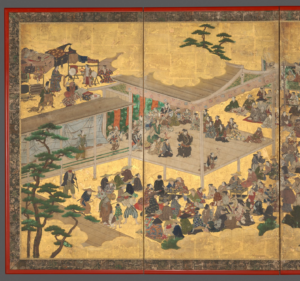
Women began imitating Okuni’s dances and male costumes, and women’s kabuki, called onna-kabuki, spread to Osaka, Edo, now Tokyo, and other parts of Japan.
The women developed the entertainment further. Their troupes adopted the shamisen, then a relatively new instrument, adding its sound to the performances. The art was growing beyond the work of its founder as more women took it up and made their own shows.
Some troupes were closely connected with prostitution. Courtesans performed dances that could also attract customers for sexual services. That connection would become important to the authorities’ response, but it shouldn’t swallow up what these women accomplished as entertainers. Their singing, dancing, costumes, and comic performances had made kabuki a popular attraction across the country.
Okuni’s later life, including when and where she died, remains uncertain. The style she had made famous continued to flourish, with women’s kabuki reaching its height between 1615 and 1629.
Women Are Banned From the Stage They Helped Create
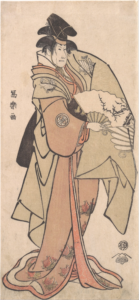
Success didn’t protect the performers from Japan’s military government, the Tokugawa shogunate. Officials objected to the connection between theatre and prostitution, and to disturbances around performances. Fights among spectators brought tighter restrictions. In 1629, women’s kabuki was banned on the grounds that it corrupted public morals.
The government’s answer was to exclude women from the public kabuki stage.
Still, the entertainment they had helped create continued.
Young male performers, who had already been appearing in kabuki, became more prominent. Their performances also attracted official scrutiny over sexual services and public morality, and they too were banned in 1652. Kabuki subsequently developed around adult male performers, with men specializing in women’s roles. Longer stories and more elaborate acting helped shape the dramatic tradition familiar today.
Women weren’t entirely silenced. They continued performing in smaller theatres, traveling troupes, and private residences. In the women’s quarters of elite households, where men weren’t admitted, female performers put on kabuki plays. Their exclusion from the major licensed theatres didn’t mean that women had stopped acting.
Kabuki’s later fame can make its beginnings seem surprising. Yet the daring performer in men’s clothes belongs at the center of the story. Okuni took the fashions and pleasures of her own time and made a theatrical sensation that other women carried across Japan. Before kabuki became a celebrated tradition, she made it an exciting new thing to see.
Sources and Further Reading
- Japan Arts Council: Izumo no Okuni
- Japan Arts Council: Kabuki-Odori
- Kyoto National Museum collection: Okuni Kabuki Screen
- Japan Arts Council: Onna-Kabuki
- Japan Arts Council: The Beginning
- Agency for Cultural Affairs: Intro to Kabuki
- Nippon.com: The Origins of Kabuki
- Japan Arts Council: Onna Shibai

Keri is a blogger and digital marketing professional who founded Amazing Women In History in 2011.

Beyond the article
Join the Conversation
Share your perspective, ask a question, or add something to the story.