
Marion Bauer (1882–1955) was a pioneering American composer, music theorist, and educator whose work fundamentally altered the trajectory of 20th-century American classical music. At a time when women in classical music were largely restricted to teaching children or writing light, delicate salon pieces, Bauer broke institutional barriers as a relentless advocate for complex, experimental American art music. Her visionary compositions and theoretical writings helped dismantle European dominance over American concert halls and created a lasting blueprint for modern American composition.

Early Life and the Paris Breakthrough
Born in Walla Walla, Washington, in 1882, Marion Bauer was raised in a musical family, but the rigid expectations of late-19th-century society offered few formal paths for a woman aspiring to be a serious, large-scale composer. Undeterred, she moved to New York City to study piano and music theory, eventually traveling to France in 1906.
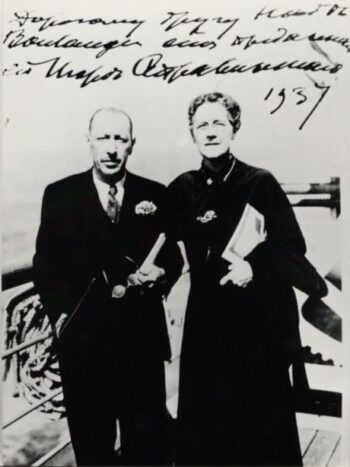
In Paris, Bauer achieved a crucial historic milestone: she became the very first American student to study with Nadia Boulanger, the legendary French pedagogue who would go on to mentor virtually every major American composer of the mid-20th century.
Boulanger taught Bauer advanced counterpoint and European structural discipline. In return, Bauer introduced Boulanger to the distinctly open, impressionistic sounds emerging in modern music.
This teacher-student relationship created a vital pipeline between European technique and American innovation that would define modern classical composition for decades.
Moving Away from Romanticism & Breaking Modernist Boundaries

To appreciate Bauer’s revolution, one must understand what American classical music sounded like at the turn of the 20th century. For decades, American concert halls were dominated by European Romanticism, a style characterized by lush, highly emotional melodies, predictable song structures, and strict rules resolving dissonance into harmonious chords.
Modernism, by contrast, threw those rigid rules away. Modernist composers used dissonance, unpredictable rhythms, and unresolved chords to express the complex, fast-paced realities of the modern world.
When Bauer began composing pieces like Symphonic Suite and Sun Splendor, she bypassed delicate “feminine” parlor music and tackled dense orchestral textures. She embraced non-traditional harmonies, incorporating stacked “ninth” and “eleventh” chords (dissonant notes placed closely together) and ancient modal scales.
For a non-musician, the effect was striking: instead of sweet, comforting tunes, Bauer’s music offered mysterious, shimmering, and often jarring soundscapes. She proved that American classical music didn’t have to sound like a German symphony; it could be bold, challenging, and atmospheric.
Institutional Firsts & Shaping Modern Music Education
In 1926, Bauer shattered a massive institutional barrier by becoming the first woman appointed to the full-time music faculty at New York University (NYU), where she taught music history and composition for over two decades.
Her impact as an educator extended far beyond NYU’s walls through her groundbreaking textbook, Twelfth Hour Music Theory (and her seminal 1933 book, Twelfth Hour Music: Trends in the Twentieth Century).
At a time when music students were taught exclusively to analyze classical European masters like Bach and Beethoven, Bauer wrote the definitive guides explaining how to write and analyze contemporary modernist music. She taught an entire generation of young American musicians how to read, write, and appreciate complex modern harmonies.
How Marion Bauer Influenced the Sound Tracks of American Culture
While casual listeners today might not instantly recognize Bauer’s name on a concert program, her fingerprints are all over 20th-century American music.
By championing modernist harmonic structures and mentoring younger composers, Bauer directly helped shape the musical landscape that enabled iconic American masterworks to exist:
- Aaron Copland’s Appalachian Spring and Fanfare for the Common Man: Copland was a close contemporary and beneficiary of the modern American network Bauer helped build. His signature “open American sound” (spacious, dissonant, and modal) drew directly on the theoretical techniques Bauer championed in the 1920s.
- The Golden Age of Film Scores: Hollywood composers like Bernard Herrmann (who scored Alfred Hitchcock’s Psycho and Vertigo) relied heavily on the unresolved dissonances and atmospheric modal harmonies that Bauer taught and promoted, using them to build onscreen suspense and psychological drama.
Without Bauer pushing American audiences to accept dissonance and modernist form in the 1920s and 1930s, the soundtracks of modern American cinema and concert halls would have sounded vastly different.
Relentless Advocacy for Living Composers
Bauer recognized early in her career that writing great music was meaningless if American concert halls refused to play it. At the time, major American orchestras functioned as museums, playing almost exclusively dead European composers.
To break this monopoly, Bauer became a formidable activist:
- She co-founded the American Music Guild to ensure living American composers had a platform for their work.
- She served on the executive board of the League of Composers and the American Composers Alliance, personally fighting to get contemporary works programmed alongside classical canons.
- She used her platform as a music critic and editor for Musical Leader to write fierce, articulate defenses of living composers, ensuring women and young American creators received serious critical attention rather than dismissive reviews.
Legacy and Impact
Marion Bauer was a true visionary who systematically built the infrastructure for modern American classical music. Through her courage as a composer, her historic institutional appointments, and her unyielding advocacy, she proved that an American woman could master complex musical theory, reshape higher education, and redefine a nation’s musical identity.
Her legacy endures in every modern American composition that dares to embrace dissonance, push boundaries, and forge its own path.
Sources & References
- Bauer, Marion. “The Literary Liszt.” Musical Quarterly, July 1936.
- Hisama, Ellie M. Gendering Musical Modernism: The Music of Ruth Crawford, Marion Bauer, and Miriam Gideon. Cambridge University Press, 2001.
- New York University Archives. Marion Eugenie Bauer Papers, 1936–1957. Call number MC.3, NYU Special Collections. 0.5 linear feet, one manuscript box.
- Pickett, Susan E. Marion and Emilie Frances Bauer: From the Wild West to American Musical Modernism. Lulu Press, 2014.

Keri is a blogger and digital marketing professional who founded Amazing Women In History in 2011.

Leave a Reply